

Quick answer: Shilajit is a sticky, tar-like resin that seeps out of rocks in high mountains like the Himalayas. It forms over centuries from rotting plants. Ayurveda has used it for strength and energy for a very long time. Possible shilajit benefits include energy, healthy ageing and male hormone support, but human research is small and early.
Key takeaways
- Shilajit is not a plant or a herb. It is a natural resin made from plant matter that broke down inside rocks over hundreds of years.
- Its main active part is fulvic acid, along with minerals such as iron.
- Most claimed shilajit benefits come from tradition, lab tests or small human studies. Big, strong trials are missing.
- Raw or poor-quality shilajit can contain heavy metals. Only use a purified, lab-tested product.
- Pregnant or breastfeeding women, children, and people with heart, blood pressure, diabetes or iron problems should ask a doctor first.
Written by Bioqem Pharma editorial team. Last updated: 10 October 2026.
What is shilajit?
Shilajit is a natural resin that oozes out of rock cracks in high mountains. It is dark brown to black and feels sticky, a bit like tar. In summer, the heat softens it and it slowly seeps out of the rocks.
It is found mainly in the Himalayas. It also comes from other high ranges, such as the Altai mountains in Russia and Central Asia. People in these regions have collected it for centuries.
Shilajit has a strong, earthy and slightly bitter smell. Sellers sell it as soft resin, powder, capsules, tablets and liquid drops. In Ayurveda (India’s traditional system of medicine), it is one of the best-known rasayanas (rejuvenating tonics for strength and long life).
Shilajit at a glance
| What it is | Natural mineral resin from rocks, not a plant |
| Other names | Shilajatu (Sanskrit), mumijo or mumie, mineral pitch |
| Where found | Himalayas, Altai and other high mountains |
| Main active part | Fulvic acid, plus minerals |
| Traditional role | Ayurvedic rasayana for strength and vitality |
| Evidence | Mostly small or early studies |
| Biggest risk | Heavy metals in raw or fake products |
Shilajit meaning: where does the name come from?
The name comes from the Sanskrit word Shilajatu. Shila means rock.
Jatu is usually read as resin or “born from”. So the plain meaning is “resin born from the rock”.
You may also see a popular translation: “conqueror of mountains and destroyer of weakness”. That line shows how highly people have rated it. But it is a poetic meaning, not a literal one.
In English, shilajit is often called mineral pitch or mumijo. Some texts use the Latin name Asphaltum punjabianum. It has no true botanical name, because it is not a plant.
How is shilajit made in nature?
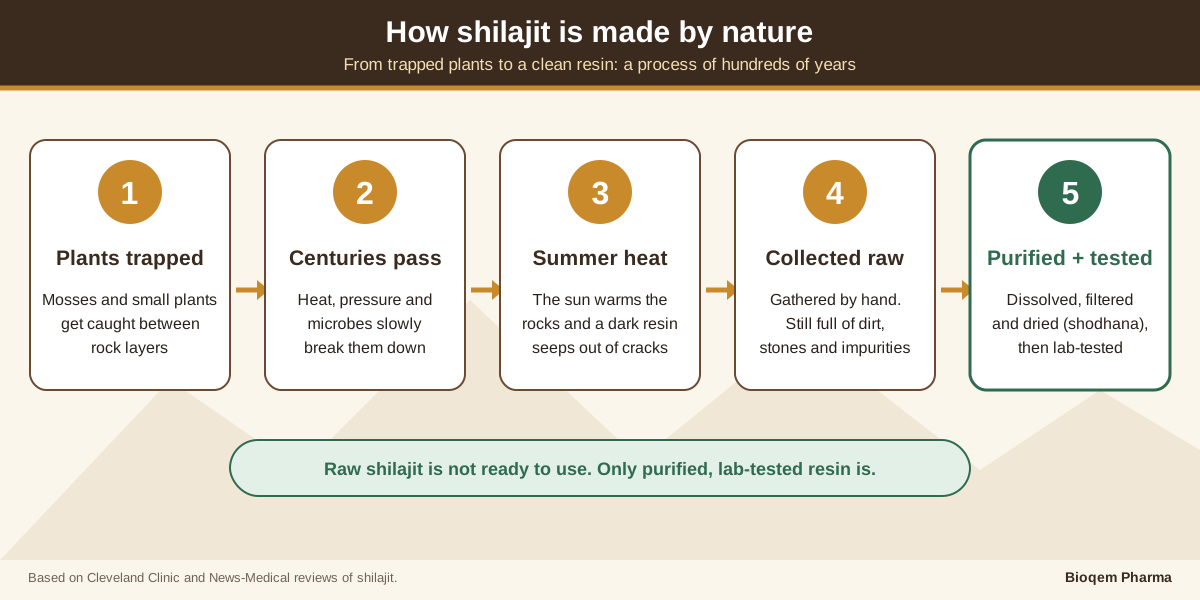
Nature makes shilajit very slowly. Plants such as mosses and small shrubs get trapped between rock layers.
Over hundreds of years, heat, pressure and tiny microbes break them down. What is left is a thick, mineral-rich resin.
When the summer sun warms the rocks, this resin seeps out of the cracks. Collectors scrape it off by hand. At this stage it is raw and full of dirt, stones and other impurities.
Raw shilajit is not ready to use. It must be cleaned. Ayurveda calls this cleaning shodhana (purification).
Modern makers dissolve it in water, filter it, and dry it slowly into a clean resin. Good makers then test it in a lab.
What is shilajit made of?
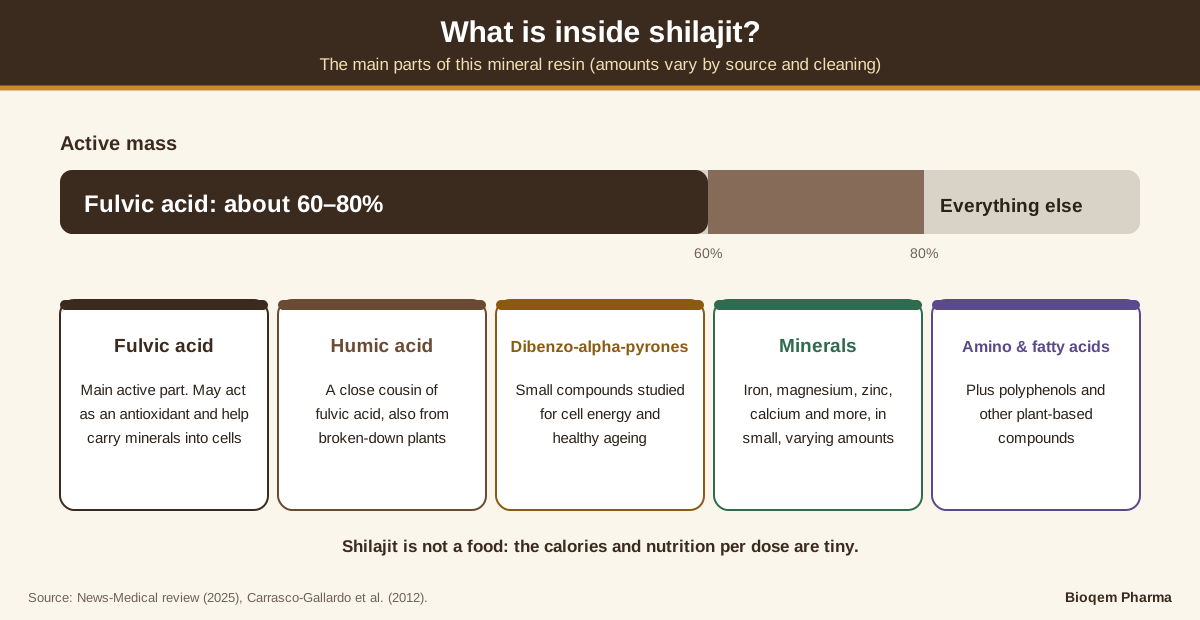
Shilajit is made of humic substances, minerals and small plant-based compounds. The most important part is fulvic acid. A 2025 review on News-Medical says fulvic acid makes up about 60 to 80% of its active mass.
Here is a simple list of what is inside:
- Fulvic acid: a natural acid from broken-down plants. It may act as an antioxidant (a substance that protects cells from damage).
- Humic acid: a close cousin of fulvic acid.
- Dibenzo-alpha-pyrones: small compounds that researchers study for energy and ageing.
- Minerals: iron, magnesium, zinc, calcium and others, in small and varying amounts.
- Other compounds: amino acids, fatty acids and polyphenols.
The exact mix changes with the mountain, the season and how the resin is cleaned. That is why two products can differ a lot. Shilajit is not a meal, so its calories and nutrition value per dose are tiny.
How does shilajit work in the body?
Nobody knows exactly. Researchers have some ideas, mostly from lab and animal studies:
- Cell energy: its compounds may support the mitochondria (the tiny power units inside your cells).
- Antioxidant action: fulvic acid may protect cells from damage. At high doses it may also do the opposite, so more is not better.
- Carrying nutrients: fulvic acid may help minerals move into cells.
- Hormones: small human studies suggest it may affect testosterone in men.
So what does shilajit do for most people? Honestly, we don’t fully know yet.
These ideas explain why it is interesting. They do not prove that it works in your body.
Shilajit benefits: what does the research say?
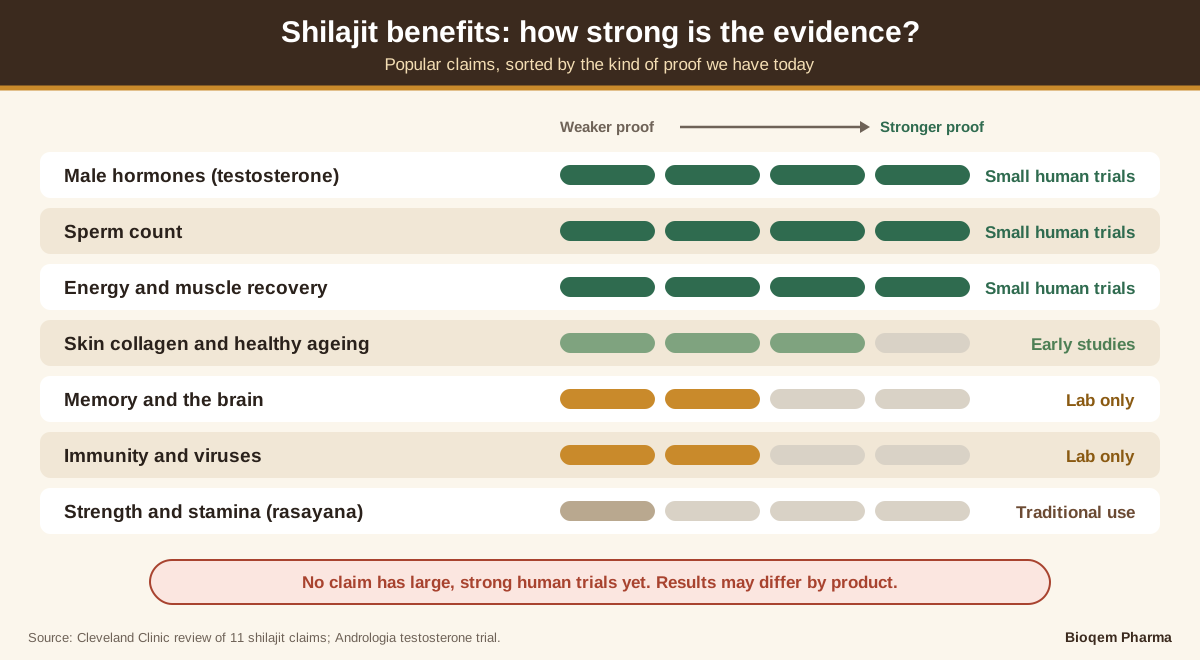
Shilajit benefits are promising but not proven. Cleveland Clinic looked at 11 common claims.
Their expert, Dr. Robert Saper, said most studies are small, and many were done in test tubes, not people.
This table sorts the main shilajit benefits by how strong the evidence is today:
| Claimed benefit | What we have | Evidence level |
|---|---|---|
| Male hormones (testosterone) | One 90-day trial in 75 healthy men aged 45 to 55 (more below) | Small human trials |
| Sperm count | One small, older study in men with low sperm count | Small human trial |
| Energy, tiredness and muscle recovery | A few small studies, some in animals | Small human trials |
| Skin collagen and healthy ageing | Early, small studies | Early |
| Memory and the brain | Lab studies on fulvic acid | Lab only |
| Immunity, viruses, inflammation | Test-tube studies with mixed results | Lab only |
| Strength and stamina (rasayana) | Centuries of Ayurvedic use | Traditional use |
What did the testosterone study find?
In the best-known trial, 75 healthy men aged 45 to 55 took purified shilajit or a dummy pill for 90 days. The shilajit group’s total testosterone rose about 20% compared with the dummy group. The study was published in Andrologia.
That sounds good, but it is one study. It used one branded, purified extract. The results may not apply to other products or to younger men.
Is shilajit good for health in general?
It may support energy and healthy ageing as part of a good lifestyle. Any shilajit benefits come on top of good habits, not instead of them. It is not a replacement for sleep, food, exercise or medicine.
A 2014 review in Phytotherapy Research also found few controlled human studies, and warned about fake products.
Think of a 45-year-old office worker who feels tired all the time. Shilajit won’t fix six hours of sleep and no exercise. A check-up comes first, because tiredness can come from low iron, thyroid problems or diabetes.
What is shilajit used for?
Shilajit is used mostly as a general strength and energy tonic. The shilajit benefits people look for most are energy, stamina and healthy ageing.
In Ayurveda it is a rasayana, given to support stamina, ageing and recovery. Today, people mainly take it for these reasons:
- Energy and tiredness: the most common reason people try it.
- Men’s health: stamina, testosterone and fertility support. If this is your interest, read our men’s sexual health guide too.
- Women’s health: energy, iron and skin. Women must take extra care because of hormone effects (see the side effects section).
- Gym and recovery: some people use it for muscle recovery after exercise.
- Healthy ageing: as a daily tonic for older adults, with a doctor’s advice.
Why is shilajit used so widely if proof is thin? Mostly because of its long history in Ayurveda and Unani practice. You can read about that history in our guide to the history of Ayurveda.
Whatever shilajit is used for, the form matters. It comes as resin, capsules, tablets, powder and drops. Resin is the least processed form.
Capsules and tablets are easier to carry and dose. Whatever the form, follow the label or your doctor, and do not take more because you want faster results.
Shilajit side effects and who should avoid it
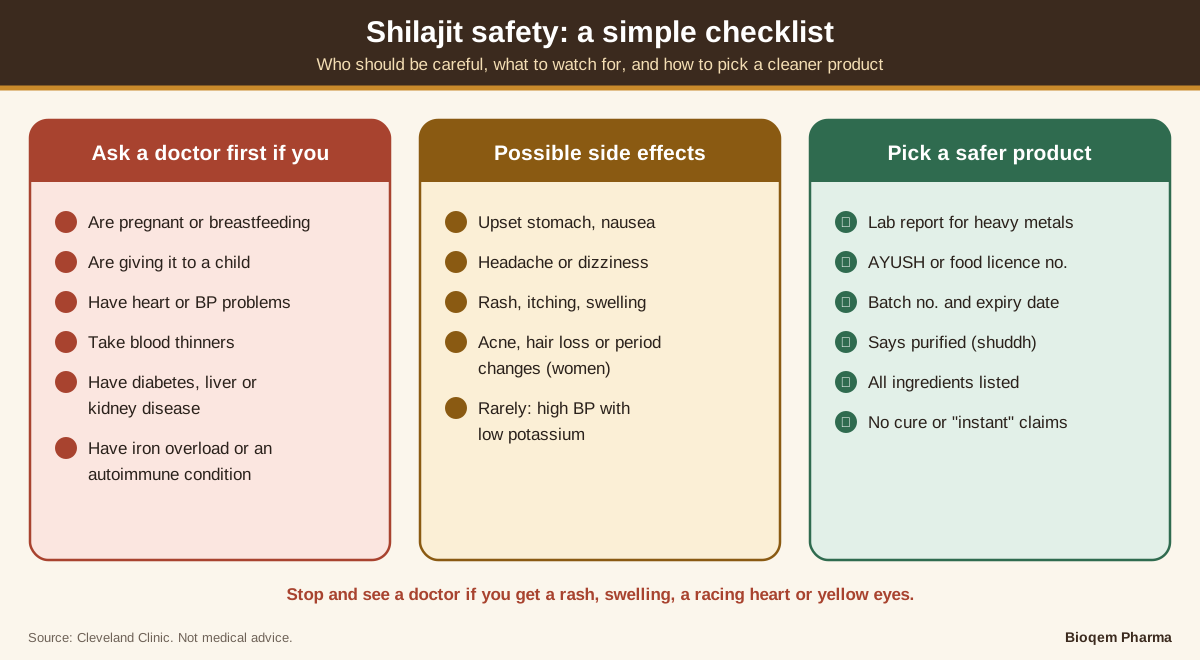
Shilajit side effects are usually mild when people use a clean, purified product as directed. But it is not risk-free. Cleveland Clinic lists these possible effects:
- Upset stomach, nausea, vomiting or loose motions
- Headache, dizziness or a sore throat
- Allergic reactions such as rash, itching or swelling
- Hormone changes. In women, higher testosterone may cause acne, irregular periods or hair loss.
- Rarely, high blood pressure with low potassium. One case report described this.
The biggest danger is not shilajit itself. It is dirty or fake shilajit. Raw resin can carry heavy metals such as lead, arsenic, mercury and thallium, plus fungi.
Ask a doctor before using shilajit if you:
- are pregnant, breastfeeding or trying to conceive
- are giving it to a child (it is not advised for children)
- have heart disease, high or low blood pressure, or take blood thinners
- have diabetes, or liver or kidney disease
- have too much iron in the body (haemochromatosis)
- have an autoimmune condition, such as rheumatoid arthritis or lupus
- take regular medicines for sugar, blood pressure or hormones. Never stop or change them on your own.
How can you check if shilajit is good quality?
Check the paperwork, not the colour or the price. Simple home tests (like rolling it between your fingers or dropping it in water) cannot show heavy metals. Only a lab can.
A 6-point label checklist:
- Lab report: ask for a recent certificate of analysis (a lab report) for heavy metals.
- Licence: look for an AYUSH or food licence number on the pack.
- Batch and dates: batch number, manufacturing date and expiry date should be printed.
- Purified: the label should say purified or shuddh (cleaned).
- Full ingredients: if it is a blend, every ingredient should be listed.
- Honest claims: skip any product that promises a cure, instant results or “no side effects”.
Picture a mother of two buying shilajit for her father. A cheap jar at a fair has no label and no report. A sealed pack with a batch number and a lab report is the safer choice, even if it costs more.
Common myths about shilajit
| Myth | Fact |
|---|---|
| Shilajit is a herb. | It is a mineral resin formed from old plant matter inside rocks. |
| Natural means it is always safe. | Raw shilajit can contain heavy metals. Purified, tested products are safer. |
| It works like an instant energy pill. | Studies ran for weeks to months. Effects, if any, are slow and modest. |
| Only men can take it. | Women use it too, but should watch for hormone side effects and ask a doctor. |
| A higher dose works better. | More is not better. Follow the label or your doctor. |
| If it floats or melts, it is real. | Home tests cannot show purity or heavy metals. Only a lab report can. |
When should you see a doctor?
Stop taking shilajit and see a doctor if you notice:
- rash, swelling of the face or lips, or trouble breathing
- a fast or pounding heartbeat, or headaches that do not go away
- vomiting or loose motions that last more than a day
- new acne, hair loss or changes in periods (for women)
- dark urine, yellow eyes or skin, or pain on the upper right side of the belly
Also see a doctor before starting it if you feel tired for weeks. Tiredness has many causes, and some need tests and proper care.
Frequently asked questions
Is shilajit safe?
Purified, lab-tested shilajit seems fairly safe for most healthy adults when used as directed. Most shilajit side effects are mild, but raw or fake products can contain heavy metals. Pregnant or breastfeeding women, children and people with long-term illness should ask a doctor first.
Does shilajit really work?
It may help some people, but the proof is limited. Small trials suggest shilajit benefits for testosterone and tiredness. Bigger, independent trials are still needed.
What is shilajit called in English?
It is often called mineral pitch or mumijo. The shilajit meaning in Sanskrit is roughly “resin born from the rock”, from the word Shilajatu.
Where is shilajit found?
Mainly in the Himalayas, in India, Nepal and nearby areas. It is also found in the Altai mountains and other high ranges in Central Asia.
Can women take shilajit?
Many women do, but it may raise testosterone and cause acne or period changes. It should be avoided in pregnancy and breastfeeding. Talk to a doctor first.
Can I take shilajit every day?
Studies have given it daily for up to a few months. Follow the product label, and take breaks if your doctor advises. Do not take it long-term without medical advice.
How long does shilajit take to work?
Studies measured changes after several weeks to three months. It is not an instant product. If you feel no change after a fair trial, talk to your doctor.
Sources
- Shilajit: benefits and risks, Cleveland Clinic
- Clinical evaluation of purified Shilajit on testosterone levels in healthy volunteers, Andrologia
- Shilajit: a natural phytocomplex with potential procognitive activity, International Journal of Alzheimer’s Disease, 2012
- Safety and efficacy of shilajit (mumie, moomiyo), Phytotherapy Research, 2014
- Shilajit: health benefits, risks and clinical evidence, News-Medical, 2025
Read next
- Men’s Sexual Health: A Complete Guide in Simple Words
- If you want to see our range, take a look at our Shilajit Gold Resin. Each batch is lab-tested for heavy metals, and we can share the report.
This article is for general education only. It is not medical advice and does not diagnose, treat, cure or prevent any disease. Please talk to a qualified doctor before you change your diet, routine or medicines.