
Shilajit: Benefits, Uses, Side Effects and How It Works (A Complete Guide in Simple Words)

Quick answer: Shilajit is a sticky, tar-like resin that seeps out of rocks in high mountains like the Himalayas. It forms over centuries from rotting plants. Ayurveda has used it for strength and energy for a very long time. Possible shilajit benefits include energy, healthy ageing and male hormone support, but human research is small and early.

Key takeaways

  • Shilajit is not a plant or a herb. It is a natural resin made from plant matter that broke down inside rocks over hundreds of years.
  • Its main active part is fulvic acid, along with minerals such as iron.
  • Most claimed shilajit benefits come from tradition, lab tests or small human studies. Big, strong trials are missing.
  • Raw or poor-quality shilajit can contain heavy metals. Only use a purified, lab-tested product.
  • Pregnant or breastfeeding women, children, and people with heart, blood pressure, diabetes or iron problems should ask a doctor first.

Written by Bioqem Pharma editorial team. Last updated: 10 October 2026.

What is shilajit?

Shilajit is a natural resin that oozes out of rock cracks in high mountains. It is dark brown to black and feels sticky, a bit like tar. In summer, the heat softens it and it slowly seeps out of the rocks.

It is found mainly in the Himalayas. It also comes from other high ranges, such as the Altai mountains in Russia and Central Asia. People in these regions have collected it for centuries.

Shilajit has a strong, earthy and slightly bitter smell. Sellers sell it as soft resin, powder, capsules, tablets and liquid drops. In Ayurveda (India’s traditional system of medicine), it is one of the best-known rasayanas (rejuvenating tonics for strength and long life).

Shilajit at a glance

What it is Natural mineral resin from rocks, not a plant
Other names Shilajatu (Sanskrit), mumijo or mumie, mineral pitch
Where found Himalayas, Altai and other high mountains
Main active part Fulvic acid, plus minerals
Traditional role Ayurvedic rasayana for strength and vitality
Evidence Mostly small or early studies
Biggest risk Heavy metals in raw or fake products

Shilajit meaning: where does the name come from?

The name comes from the Sanskrit word Shilajatu. Shila means rock.

Jatu is usually read as resin or “born from”. So the plain meaning is “resin born from the rock”.

You may also see a popular translation: “conqueror of mountains and destroyer of weakness”. That line shows how highly people have rated it. But it is a poetic meaning, not a literal one.

In English, shilajit is often called mineral pitch or mumijo. Some texts use the Latin name Asphaltum punjabianum. It has no true botanical name, because it is not a plant.

How is shilajit made in nature?

Nature makes shilajit very slowly. Plants such as mosses and small shrubs get trapped between rock layers.

Over hundreds of years, heat, pressure and tiny microbes break them down. What is left is a thick, mineral-rich resin.

When the summer sun warms the rocks, this resin seeps out of the cracks. Collectors scrape it off by hand. At this stage it is raw and full of dirt, stones and other impurities.

Raw shilajit is not ready to use. It must be cleaned. Ayurveda calls this cleaning shodhana (purification).

Modern makers dissolve it in water, filter it, and dry it slowly into a clean resin. Good makers then test it in a lab.
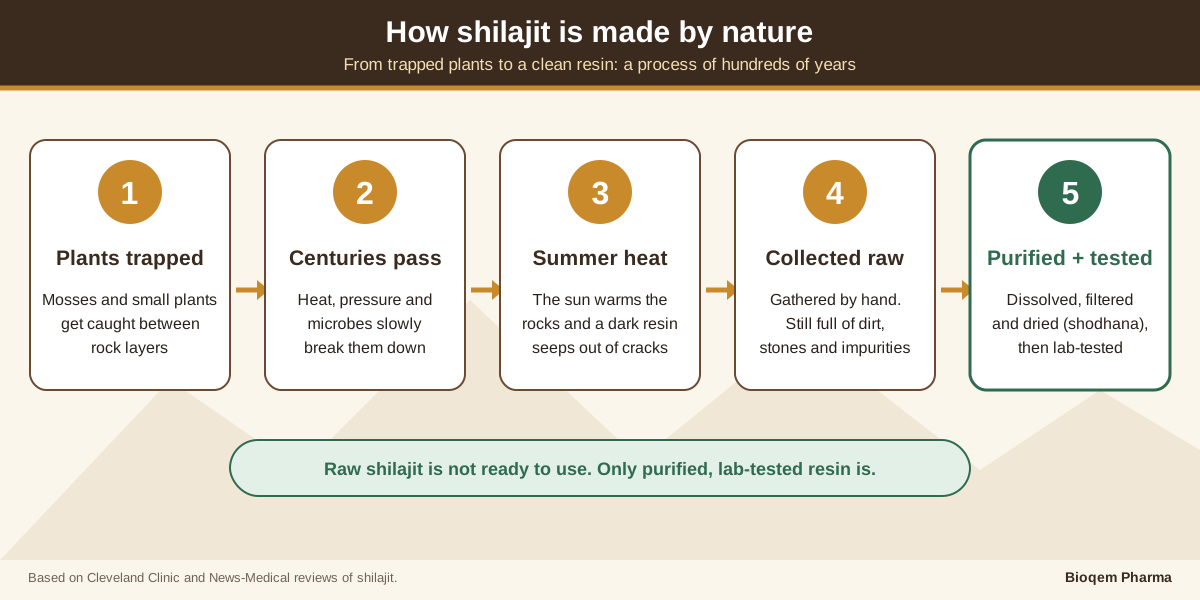
How shilajit is made: plants trapped in rocks break down over centuries, seep out in summer heat, then are collected, purified and lab-tested
Infographic: how shilajit forms in the mountains and becomes a clean resin.

What is shilajit made of?

Shilajit is made of humic substances, minerals and small plant-based compounds. The most important part is fulvic acid. A 2025 review on News-Medical says fulvic acid makes up about 60 to 80% of its active mass.

Here is a simple list of what is inside:

  • Fulvic acid: a natural acid from broken-down plants. It may act as an antioxidant (a substance that protects cells from damage).
  • Humic acid: a close cousin of fulvic acid.
  • Dibenzo-alpha-pyrones: small compounds that researchers study for energy and ageing.
  • Minerals: iron, magnesium, zinc, calcium and others, in small and varying amounts.
  • Other compounds: amino acids, fatty acids and polyphenols.

The exact mix changes with the mountain, the season and how the resin is cleaned. That is why two products can differ a lot. Shilajit is not a meal, so its calories and nutrition value per dose are tiny.
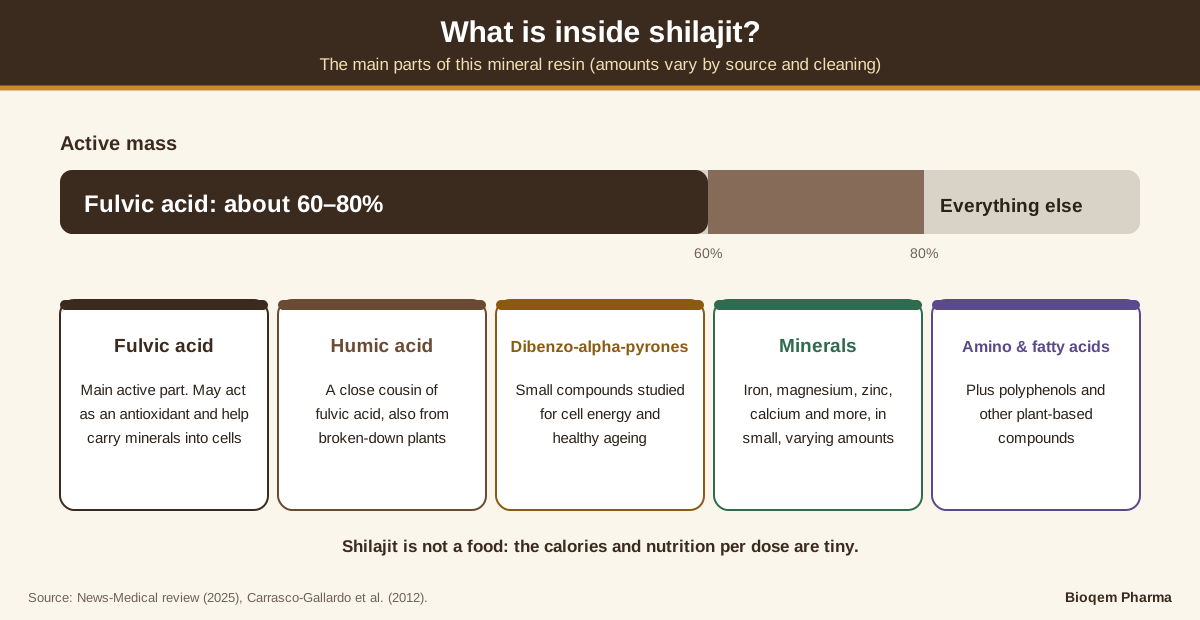
What is inside shilajit: fulvic acid about 60 to 80 percent of the active mass, plus humic acid, dibenzo-alpha-pyrones, minerals and amino acids
Infographic: the main parts of shilajit. Exact amounts vary from product to product.

How does shilajit work in the body?

Nobody knows exactly. Researchers have some ideas, mostly from lab and animal studies:

  • Cell energy: its compounds may support the mitochondria (the tiny power units inside your cells).
  • Antioxidant action: fulvic acid may protect cells from damage. At high doses it may also do the opposite, so more is not better.
  • Carrying nutrients: fulvic acid may help minerals move into cells.
  • Hormones: small human studies suggest it may affect testosterone in men.

So what does shilajit do for most people? Honestly, we don’t fully know yet.

These ideas explain why it is interesting. They do not prove that it works in your body.

Shilajit benefits: what does the research say?

Shilajit benefits are promising but not proven. Cleveland Clinic looked at 11 common claims.

Their expert, Dr. Robert Saper, said most studies are small, and many were done in test tubes, not people.

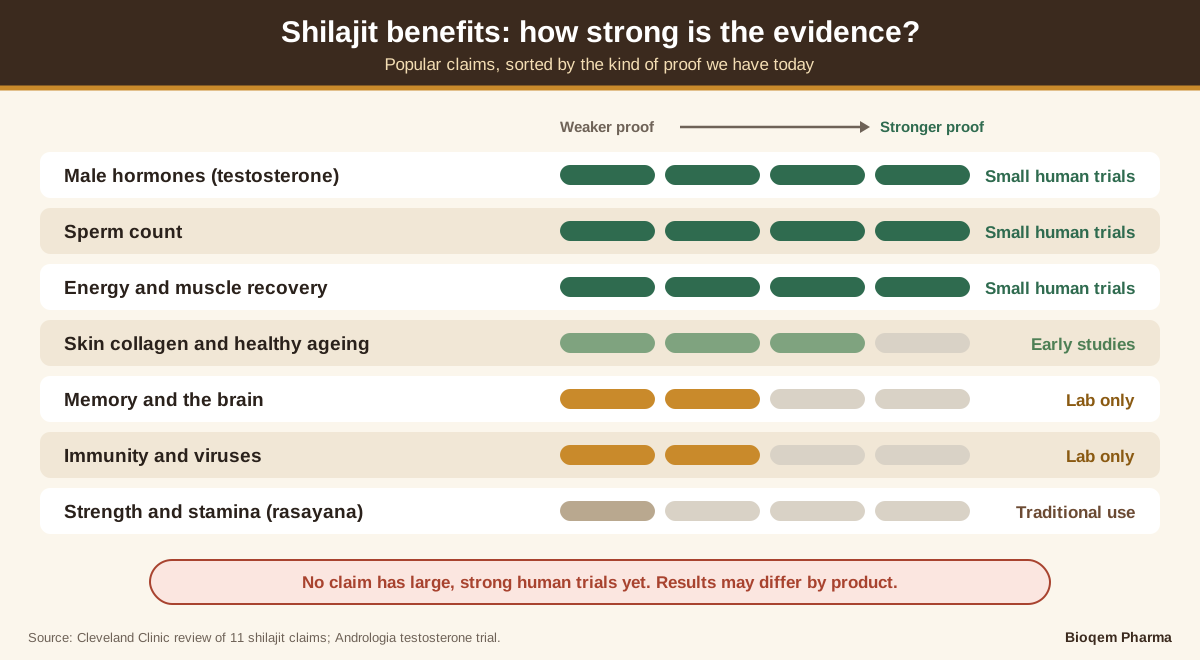
This table sorts the main shilajit benefits by how strong the evidence is today:

Claimed benefit What we have Evidence level
Male hormones (testosterone) One 90-day trial in 75 healthy men aged 45 to 55 (more below) Small human trials
Sperm count One small, older study in men with low sperm count Small human trial
Energy, tiredness and muscle recovery A few small studies, some in animals Small human trials
Skin collagen and healthy ageing Early, small studies Early
Memory and the brain Lab studies on fulvic acid Lab only
Immunity, viruses, inflammation Test-tube studies with mixed results Lab only
Strength and stamina (rasayana) Centuries of Ayurvedic use Traditional use
Shilajit benefits evidence meter: small human trials for testosterone, energy and sperm count; early studies for skin and ageing; lab-only studies for memory and immunity
Infographic: how strong the evidence is for each popular claim.

What did the testosterone study find?

In the best-known trial, 75 healthy men aged 45 to 55 took purified shilajit or a dummy pill for 90 days. The shilajit group’s total testosterone rose about 20% compared with the dummy group. The study was published in Andrologia.

That sounds good, but it is one study. It used one branded, purified extract. The results may not apply to other products or to younger men.

Is shilajit good for health in general?

It may support energy and healthy ageing as part of a good lifestyle. Any shilajit benefits come on top of good habits, not instead of them. It is not a replacement for sleep, food, exercise or medicine.

A 2014 review in Phytotherapy Research also found few controlled human studies, and warned about fake products.

Think of a 45-year-old office worker who feels tired all the time. Shilajit won’t fix six hours of sleep and no exercise. A check-up comes first, because tiredness can come from low iron, thyroid problems or diabetes.

What is shilajit used for?

Shilajit is used mostly as a general strength and energy tonic. The shilajit benefits people look for most are energy, stamina and healthy ageing.

In Ayurveda it is a rasayana, given to support stamina, ageing and recovery. Today, people mainly take it for these reasons:

  • Energy and tiredness: the most common reason people try it.
  • Men’s health: stamina, testosterone and fertility support. If this is your interest, read our men’s sexual health guide too.
  • Women’s health: energy, iron and skin. Women must take extra care because of hormone effects (see the side effects section).
  • Gym and recovery: some people use it for muscle recovery after exercise.
  • Healthy ageing: as a daily tonic for older adults, with a doctor’s advice.

Why is shilajit used so widely if proof is thin? Mostly because of its long history in Ayurveda and Unani practice. You can read about that history in our guide to the history of Ayurveda.

Whatever shilajit is used for, the form matters. It comes as resin, capsules, tablets, powder and drops. Resin is the least processed form.

Capsules and tablets are easier to carry and dose. Whatever the form, follow the label or your doctor, and do not take more because you want faster results.

Shilajit side effects and who should avoid it

Shilajit side effects are usually mild when people use a clean, purified product as directed. But it is not risk-free. Cleveland Clinic lists these possible effects:

  • Upset stomach, nausea, vomiting or loose motions
  • Headache, dizziness or a sore throat
  • Allergic reactions such as rash, itching or swelling
  • Hormone changes. In women, higher testosterone may cause acne, irregular periods or hair loss.
  • Rarely, high blood pressure with low potassium. One case report described this.

The biggest danger is not shilajit itself. It is dirty or fake shilajit. Raw resin can carry heavy metals such as lead, arsenic, mercury and thallium, plus fungi.

Ask a doctor before using shilajit if you:

  • are pregnant, breastfeeding or trying to conceive
  • are giving it to a child (it is not advised for children)
  • have heart disease, high or low blood pressure, or take blood thinners
  • have diabetes, or liver or kidney disease
  • have too much iron in the body (haemochromatosis)
  • have an autoimmune condition, such as rheumatoid arthritis or lupus
  • take regular medicines for sugar, blood pressure or hormones. Never stop or change them on your own.
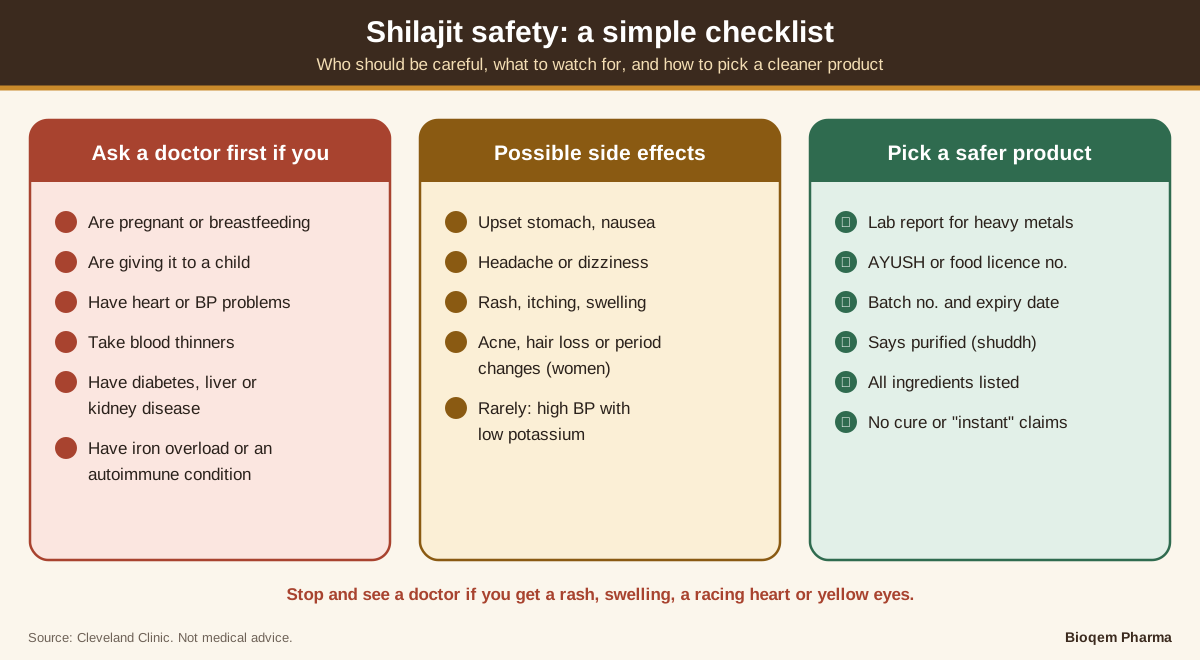
Shilajit safety checklist: who should ask a doctor first, common side effects, and signs of a good-quality lab-tested product
Infographic: who should be careful, and how to pick a safer product.

How can you check if shilajit is good quality?

Check the paperwork, not the colour or the price. Simple home tests (like rolling it between your fingers or dropping it in water) cannot show heavy metals. Only a lab can.

A 6-point label checklist:

  1. Lab report: ask for a recent certificate of analysis (a lab report) for heavy metals.
  2. Licence: look for an AYUSH or food licence number on the pack.
  3. Batch and dates: batch number, manufacturing date and expiry date should be printed.
  4. Purified: the label should say purified or shuddh (cleaned).
  5. Full ingredients: if it is a blend, every ingredient should be listed.
  6. Honest claims: skip any product that promises a cure, instant results or “no side effects”.

Picture a mother of two buying shilajit for her father. A cheap jar at a fair has no label and no report. A sealed pack with a batch number and a lab report is the safer choice, even if it costs more.

Common myths about shilajit

Myth Fact
Shilajit is a herb. It is a mineral resin formed from old plant matter inside rocks.
Natural means it is always safe. Raw shilajit can contain heavy metals. Purified, tested products are safer.
It works like an instant energy pill. Studies ran for weeks to months. Effects, if any, are slow and modest.
Only men can take it. Women use it too, but should watch for hormone side effects and ask a doctor.
A higher dose works better. More is not better. Follow the label or your doctor.
If it floats or melts, it is real. Home tests cannot show purity or heavy metals. Only a lab report can.

When should you see a doctor?

Stop taking shilajit and see a doctor if you notice:

  • rash, swelling of the face or lips, or trouble breathing
  • a fast or pounding heartbeat, or headaches that do not go away
  • vomiting or loose motions that last more than a day
  • new acne, hair loss or changes in periods (for women)
  • dark urine, yellow eyes or skin, or pain on the upper right side of the belly

Also see a doctor before starting it if you feel tired for weeks. Tiredness has many causes, and some need tests and proper care.

Frequently asked questions

Is shilajit safe?

Purified, lab-tested shilajit seems fairly safe for most healthy adults when used as directed. Most shilajit side effects are mild, but raw or fake products can contain heavy metals. Pregnant or breastfeeding women, children and people with long-term illness should ask a doctor first.

Does shilajit really work?

It may help some people, but the proof is limited. Small trials suggest shilajit benefits for testosterone and tiredness. Bigger, independent trials are still needed.

What is shilajit called in English?

It is often called mineral pitch or mumijo. The shilajit meaning in Sanskrit is roughly “resin born from the rock”, from the word Shilajatu.

Where is shilajit found?

Mainly in the Himalayas, in India, Nepal and nearby areas. It is also found in the Altai mountains and other high ranges in Central Asia.

Can women take shilajit?

Many women do, but it may raise testosterone and cause acne or period changes. It should be avoided in pregnancy and breastfeeding. Talk to a doctor first.

Can I take shilajit every day?

Studies have given it daily for up to a few months. Follow the product label, and take breaks if your doctor advises. Do not take it long-term without medical advice.

How long does shilajit take to work?

Studies measured changes after several weeks to three months. It is not an instant product. If you feel no change after a fair trial, talk to your doctor.

Sources

This article is for general education only. It is not medical advice and does not diagnose, treat, cure or prevent any disease. Please talk to a qualified doctor before you change your diet, routine or medicines.

Unani Medicine: A Complete Guide in Simple Words

Quick answer: Unani medicine is a traditional health system that began in ancient Greece and grew in Arab, Persian and Indian lands. It sees health as a balance of four body fluids, called humours. Care uses diet, daily habits, herbal medicines and hands-on therapies. Research is limited, so use it with a qualified doctor’s advice.

Key takeaways

  • “Unani” comes from Yunani, the Arabic and Persian word for “Greek”.
  • The system rests on four humours, a personal temperament (Mizaj) and six daily-life factors.
  • Care has four parts: daily regimen, diet, medicines and, rarely, surgery.
  • In India it is an AYUSH system with its own degree (BUMS), pharmacopoeia and research council.
  • Modern research is limited. Natural does not mean risk-free, so quality and a qualified Hakim matter.

Written by Bioqem Pharma editorial team. Last updated: 10 October 2026.

What is Unani medicine?

Unani medicine is a Greco-Arabic system of health care. Today it is practised mainly in South Asia. The word “Unani” comes from Yunani, which means “Greek” in Arabic and Persian. The system is also called Tibb, the Arabic word for medicine.

It looks at the whole person, not just one complaint. A Hakim (Unani doctor) asks about your food, sleep, work, mood and body type. Then the aim is to restore balance. The Delhi government’s AYUSH department says Unani puts great weight on staying healthy and preventing disease.

In India the government counts Unani as one of the AYUSH systems. That short name stands for Ayurveda, Yoga and Naturopathy, Unani, Siddha and Homoeopathy.

Unani at a glance

Word meaning From Yunani, “Greek”
Also called Tibb (medicine)
Roots Greece, then Arab and Persian lands, then India
Core idea Health is a balance of four humours and your Mizaj
Care methods Daily regimen, diet, medicines, surgery
In India AYUSH system, BUMS degree, CCRUM research council
Evidence Limited modern research

Where did Unani medicine come from?

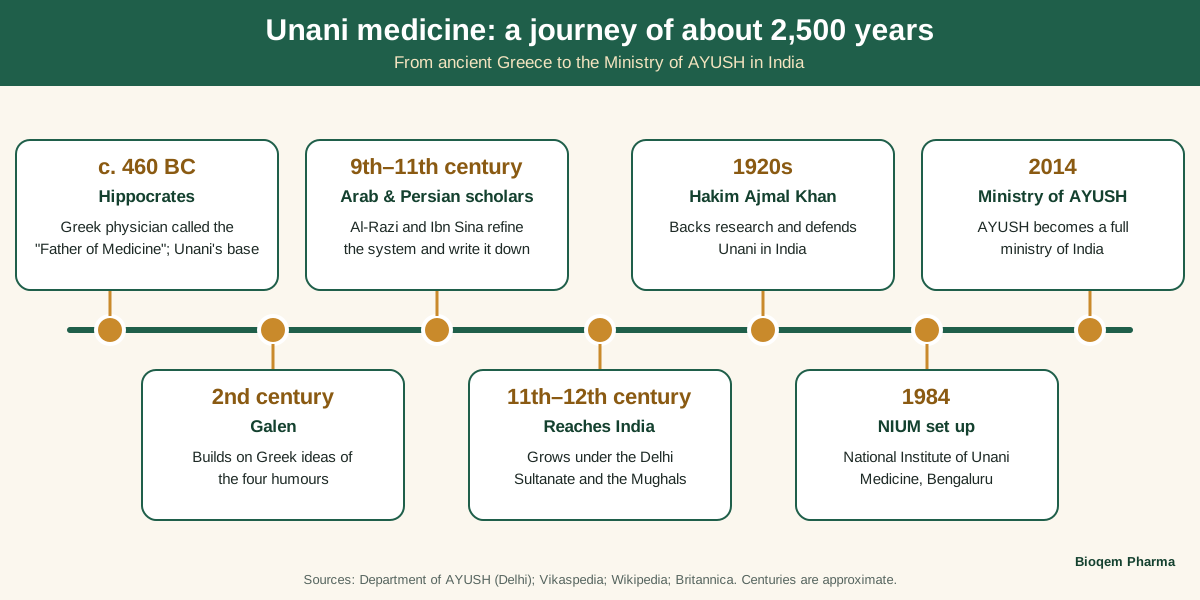
It began with the ancient Greeks. The Delhi AYUSH department credits Hippocrates (about 460 BC), known as the “Father of Medicine”, with laying its base. The Greek physician Galen built on his ideas later.

Arab and Persian scholars then refined the system and wrote it down. Al-Razi and Ibn Sina (Avicenna) are two of the best known. Britannica says Arab scholars improved it through careful testing.

Unani reached India around the 11th to 12th century. It grew under the Delhi Sultanate and the Mughal rulers. In the 1920s Hakim Ajmal Khan (1868 to 1927) backed research and resisted a British plan to ban Indian systems of medicine.

Unani medicine timeline from Hippocrates in 460 BC to the Ministry of AYUSH in 2014
Infographic: key milestones in the history of Unani, from Greece to modern India.

Today India has a full set-up around it. There is a degree course (BUMS) and a research council (CCRUM). There is also a national institute (NIUM in Bengaluru) and drug rules under the Drugs and Cosmetics Act, 1940.

How does the Unani system of medicine see the body?

The Unani system of medicine says the body runs on seven natural principles, called Umoor-e-Tabiya. They cover the elements, your temperament (Mizaj), the humours (Akhlat), the organs, the vital spirit, the body’s powers and its functions.

What are the four humours?

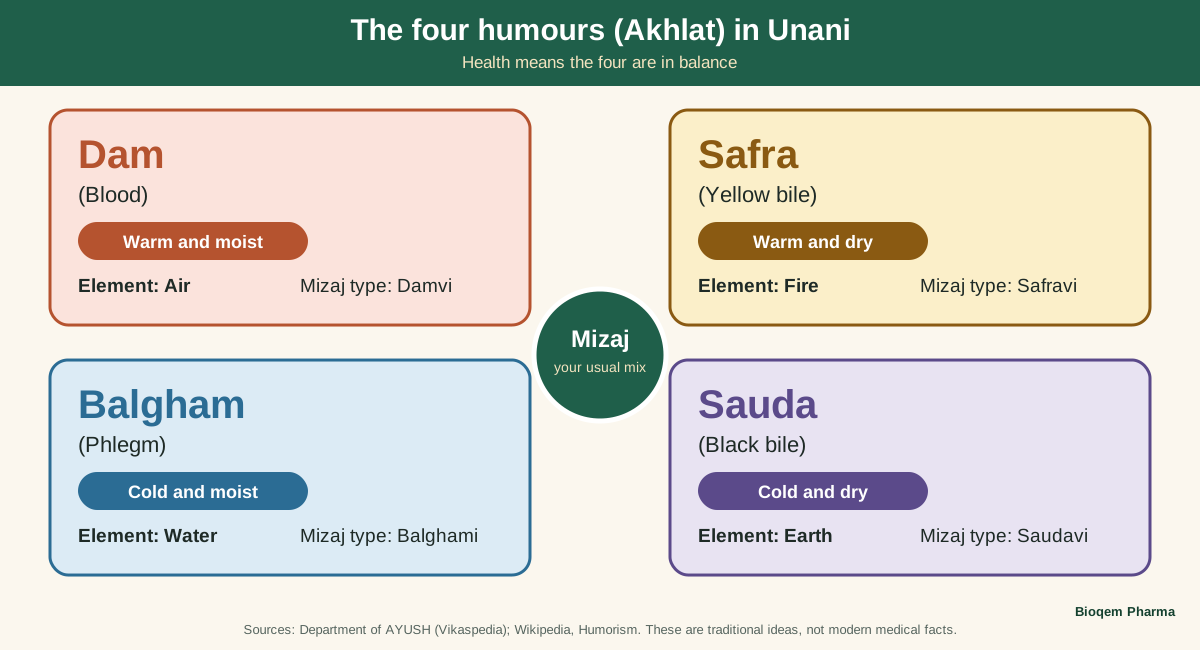
Humours (Akhlat) are four fluids that Unani believes feed and run the body. They are Dam (blood), Balgham (phlegm), Safra (yellow bile) and Sauda (black bile). Health means the four are in balance.

These are old Greek ideas. Modern medicine does not use them to explain disease. Read this part as history and tradition.

Infographic of the four humours in Unani: Dam, Balgham, Safra and Sauda, with their qualities and elements
Infographic: the four humours, their qualities, their elements and the matching Mizaj type.

What is Mizaj (temperament)?

Mizaj is your body’s usual mix of warm, cold, moist and dry qualities. Unani says every person has a different Mizaj. So two people with the same complaint may get different advice. A Hakim also thinks about your surroundings and habits.

What are the six daily-life factors?

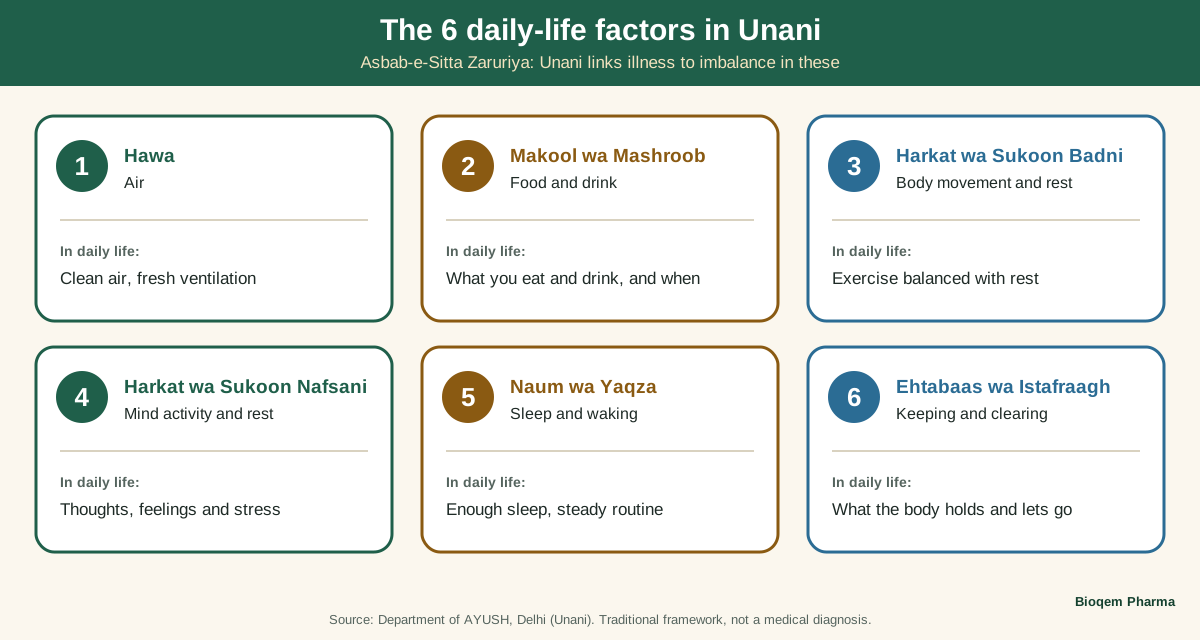
Unani names six factors that shape health every day. They are air, food and drink, body movement and rest, mind activity and rest, sleep and waking, and what the body keeps and clears. The Delhi AYUSH page says disease comes from imbalance in these.

Picture a college student who studies late, skips meals and sleeps at 3 a.m. A Hakim would look first at sleep, food and mental load. Or take an office worker who sits for ten hours. Here the first question is body movement and rest.

The six daily-life factors of the Unani system: air, food, movement, mind, sleep and waste clearing
Infographic: Asbab-e-Sitta Zaruriya, the six daily-life factors, with a plain example for each.

What do the six factors look like in a normal day?

  • Air: open a window and spend time outdoors. Avoid smoky rooms.
  • Food and drink: eat at regular times, drink enough water and go easy on fried and sugary food.
  • Body: walk or stretch every day, and rest after hard work.
  • Mind: take short breaks. Talk to someone you trust when you feel worried.
  • Sleep: keep a fixed sleep and wake time. Put screens away before bed.
  • Clearing: eat fibre and drink water. Do not hold back urine or stool.

These are general healthy habits. They are not a treatment plan for any illness.

How does Unani treatment work?

Unani treatment starts with a talk and a physical check. Then the Hakim picks one or more of four methods.

How does a Hakim check you?

A Hakim studies your Nabz (pulse), Baul (urine) and Baraz (stool). The AYUSH page says doctors depend mainly on these three. They also ask about habits, work and surroundings, and they think about your Mizaj.

What happens at a first visit?

Expect a long talk first. The Hakim asks about your complaint, food, sleep, work and past illness. Next comes the pulse, and sometimes a urine or stool check. Then you get a plan that may mix diet, daily routine and medicines. A good Hakim will also explain what to watch for and when to come back.

What are the four modes of Unani treatment?

  1. Ilaj-bil-Tadbeer (regimental therapy): routine and hands-on therapies. Examples are cupping (Hijama), massage (Dalk), exercise and the Turkish bath (Hammam).
  2. Ilaj-bil-Ghiza (diet therapy): food chosen for your Mizaj and health.
  3. Ilaj-bil-Dawa (medicines): drugs from plants, minerals and animals.
  4. Ilaj-bil-Yad (surgery): also called Jarahat. The AYUSH page says it is of very limited use.
Four modes of Unani treatment: regimental therapy, diet, medicines and surgery
Infographic: the four modes of Unani treatment, with examples.

Some regimental therapies, such as cupping, are not risk-free. Only a trained, registered practitioner should do them.

What do people use Unani for?

Unani medicine uses herbs, minerals and animal-based drugs, along with diet and daily routine. People traditionally turn to it for joint comfort, digestion, skin care and general wellbeing.

How common is it? A small 2021 survey of 100 adults in East Delhi found that 67 had heard of Unani. Of those 67, 38 had used it. Users most often named bone and joint problems, then stomach and gut problems, then lifestyle conditions. The authors say few studies on Unani use exist in India.

These uses are traditional. “Traditionally used for” does not mean proven. Nothing on this page says that Unani medicine will fix a disease.

Is Unani medicine safe, and what does research say?

It can be safe when a product is well made, tested and used under a qualified doctor. But long use is not the same as proof. Modern science does not back the humour theory, and strong trials on Unani medicine are few.

Quality is the biggest worry. A research paper on a Unani tablet says herbal products can be adulterated. It also says heavy metals and pesticides can be a real danger, so standard tests are needed.

India has rules to help. Unani drugs come under the Drugs and Cosmetics Act, 1940. According to the Department of AYUSH, the Unani Pharmacopoeia of India has 298 monographs, and the national formulary lists 1,091 formulations.

Simple safety steps:

  • Tell every doctor about all the herbs and medicines you take.
  • If you are pregnant or breastfeeding, ask a qualified doctor first. Never give a herbal product to a child on your own.
  • If you take regular medicines for blood sugar, blood pressure or blood thinning, never stop or swap them without your doctor.
  • Check the pack for a licence number, batch number, ingredient list and expiry date.
  • Stop and call a doctor if you get a rash, swelling, vomiting or unusual weakness.

Unani vs Ayurveda: what is the difference?

Both are old, whole-person systems. Both use herbs, diet and lifestyle. They differ in origin and in how they explain the body. For the Indian side of the story, read our guide on the history of Ayurveda.

Point Unani Ayurveda
Origin Greece, then Arab and Persian lands, then India Indian subcontinent
Body model Four humours: blood, phlegm, yellow bile, black bile Three doshas: Vata, Pitta, Kapha
Classic texts Works such as Ibn Sina’s Canon of Medicine Charaka Samhita, Sushruta Samhita
University degree BUMS BAMS
Regulation in India AYUSH ministry, NCISM AYUSH ministry, NCISM

Common myths about Unani

Myth Fact
Unani is only herbs. It has four modes, including diet and daily regimen.
Unani and Ayurveda are the same. Origin, theory and texts differ, though both aim at balance.
Natural means risk-free. Herbal products can be contaminated or clash with medicines.
There are no rules for it in India. The Drugs and Cosmetics Act, a pharmacopoeia and a degree course apply.
Anyone who sells herbs is a Hakim. A qualified Hakim holds a recognised degree and registration.
It can replace tests and modern medicine. Research is limited. Use it with, not instead of, modern care for serious illness.

Who is a Hakim, and when should you see a doctor?

A Hakim is a trained Unani doctor. The main degree in India is the BUMS (Bachelor of Unani Medicine and Surgery). It is a course of about five and a half years, with a one-year internship. The National Commission for Indian System of Medicine (NCISM) sets the standards.

Questions to ask before you start any care:

  • What is your degree, and may I see your registration?
  • What is in this medicine, and who makes it?
  • How long should I take it, and what should I watch for?
  • Could it clash with my regular medicines?
  • Do I need a blood test or a check-up first?
  • When should I stop and see another doctor?

See a doctor soon if:

  • symptoms last for weeks without getting better, or keep coming back
  • you have diabetes, high blood pressure, heart disease or another long-term condition
  • you are pregnant or breastfeeding, or the patient is a child
  • you have a reaction after any herb, such as a rash, swelling or vomiting
  • you notice unexplained weight loss, blood in stool or urine, or a new lump

Get urgent care for chest pain, trouble breathing, fainting, sudden weakness on one side of the body, or heavy bleeding.

Frequently asked questions

What does Unani mean?

Unani comes from Yunani, the Arabic and Persian word for Greek. It points to the Greek roots of the system. People also call it Tibb, which means medicine.

What is the full form of Unani?

Unani has no full form. It is not an acronym. It is a word that means “Greek”.

Who is the father of Unani medicine?

Hippocrates is the name most often given. The Delhi AYUSH page credits him with its base, about 460 BC. Galen, Al-Razi and Ibn Sina shaped it later. Hakim Ajmal Khan is respected for protecting it in India.

Is Unani medicine safe?

It can be, when a product is well made, tested and used under a qualified doctor. Natural does not mean risk-free. Take extra care in pregnancy, with children and with regular medicines.

Does Unani medicine have side effects?

Yes, it can. Any herbal or mineral-based product may cause a reaction in some people, or clash with other medicines. Poor-quality products add more risk, so stop and see a doctor if you feel unwell after using one.

Is Unani medicine effective?

Research is limited. Unani has a long tradition, but strong modern trials are few. Be careful with any promise of sure results. Use it alongside, not instead of, modern care for serious illness.

Who is a Unani doctor?

A Unani doctor, called a Hakim, is trained in this system. In India that usually means a BUMS degree and registration. Always ask to see the registration.

What is the difference between Unani and Ayurveda?

Unani began in Greece and the Arab world, and uses four humours. Ayurveda began in India and uses three doshas. Both use herbs, diet and lifestyle to seek balance.

Sources

This article is for general education only. It is not medical advice and does not diagnose, treat, cure or prevent any disease. Please talk to a qualified doctor before you change your diet, routine or medicines.
Sex power kaise badhaye: sahi tarike, galat dhaarnayein aur doctor kab milein

Quick answer: Sex power kaise badhaye? Sabse pehle roz ki aadatein sudharein: poori neend lein, har din chalein ya exercise karein, wazan sahi rakhein, stress kam karein aur tambaku tatha zyada sharab se door rahein. NHS aur Mayo Clinic erection ki dikkat ke liye yahi aadatein batate hain. Dikkat baar-baar ho to doctor ko dikhayein.

Mukhya baatein

  • Sex power ek cheez nahi hai. Iske 4 hisse hain: ichha, erection, staying time aur energy.
  • Stress, kam neend, sharab, smoking aur kuch bimariyan sex power girane ki aam wajah hain.
  • Roz ki achhi aadatein sabse safe pehla kadam hain. ‘Turant power’ ke daavon se savdhan rahein.
  • Sex time sabka alag hota hai. Mayo Clinic ke mutabik average lagbhag paanch minute hai.
  • Dikkat baar-baar ho to doctor se milein. Kabhi-kabhi wajah ka ilaaj karne se problem door ho jaati hai.

Likhne wale: Bioqem Pharma editorial team. Medical review: [CONFIRM: doctor ka naam aur yogyata]. Aakhri review: [CONFIRM: tareekh].

Sex power kya hota hai? 4 hisson mein samjhein

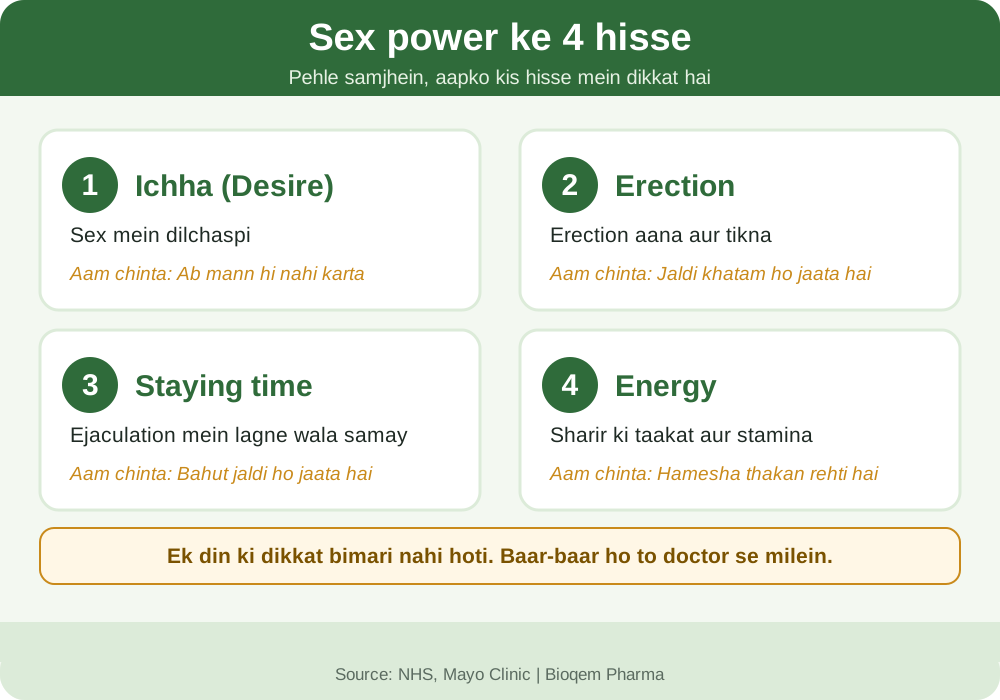
Sex power koi medical term nahi hai. Aam bol-chaal mein log ise 4 alag cheezon ke liye bolte hain. Inhein alag-alag samajhna zaroori hai, kyunki har hisse ki wajah aur samadhan alag hote hain.

Hissa Matlab Aam chinta
Ichha (Desire) Sex mein dilchaspi Ab mann hi nahi karta
Erection Erection aana aur tikna Jaldi khatam ho jaata hai
Staying time Ejaculation mein lagne wala samay Bahut jaldi ho jaata hai
Energy Sharir ki taakat aur stamina Hamesha thakan rehti hai
Sex power ke 4 hisse: ichha, erection, staying time aur energy

Log is sawal ko kai tarah se search karte hain, jaise ‘sex power kaise badhaye male’ ya ‘how to increase sex power in Hindi’. Shabd badalte hain, par chaaron hisse wahi rehte hain. Pehle dekhein ki aapko sabse zyada kis hisse ki chinta hai.

Ek baat yaad rakhein: lagbhag har mard ka kabhi na kabhi ‘off day’ hota hai. NHS ke mutabik zyada-tar mardon ko kabhi-kabhi erection nahi aata ya tik nahi pata. Iski aam wajah stress, thakan ya zyada sharab hoti hai.

Yaani ek din ki dikkat bimari nahi hoti.

Sex power kam kyun hota hai?

Sex power girne ki wajah sharir, mann, aadatein ya dawaiyan ho sakti hain. Aksar kai wajah ek saath hoti hain. Mayo Clinic ke mutabik wajah kabhi sharirik aur mansik dono hoti hai, aur dono ek-doosre ko badha sakti hain.

Wajah ka group Aam udaharan
Sharir Diabetes, high BP, high cholesterol, dil aur blood vessel ki bimari, motapa, low testosterone, neend ki dikkat
Mann Stress, anxiety, depression, rishton ki problem
Aadatein Tambaku, zyada sharab, nashe ki aadat, bahut zyada cycling
Dawaiyan Kuch antidepressant, antihistamine, aur BP, dard ya prostate ki dawaiyan

Source: NHS aur Mayo Clinic.

Agar aap koi regular dawai lete hain, to use khud band na karein. Pehle doctor se poochhein. Woh dose ya dawai badal sakte hain.

Sex power kaise badhaye: 8 safe aadatein jo madad karti hain

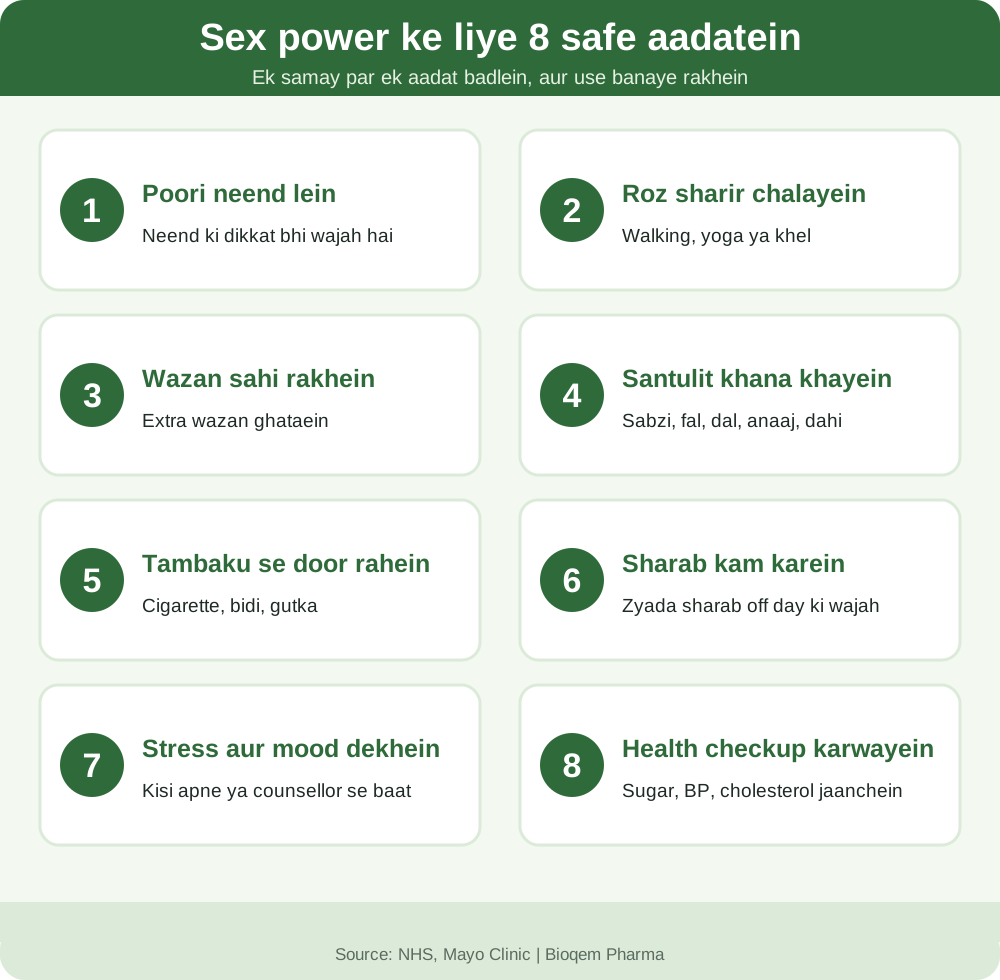
Sabse safe shuruaat roz ki achhi aadatein hain. Yahi kadam NHS aur Mayo Clinic bhi erection ki dikkat ke liye batate hain. Ek samay par ek aadat badlein, taaki use banaye rakhna aasaan ho.

  1. Poori neend lein. Mayo Clinic ne neend ki dikkat ko erection problem ki wajahon mein ginaya hai. Agar aap zor se kharrate lete hain ya din bhar neend aati hai, to doctor ko batayein.
  2. Roz sharir chalayein. Walking, yoga, khel ya halka gym, jo pasand ho wahi chunein. NHS ek aur salah deta hai: agar aap hafte mein 3 ghante se zyada cycle chalate hain, to kuch samay cycling se break lein.
  3. Wazan sahi rakhein. NHS kehta hai ki extra wazan ghatane se madad mil sakti hai. Mayo Clinic motape ko risk factor batata hai.
  4. Santulit khana khayein. Sabzi, fal, dal, sabut anaaj, nuts aur dahi lein. Talla hua aur meetha kam karein.
  5. Tambaku chhodein. Cigarette, bidi ya gutka, kisi bhi roop mein tambaku se bachein. NHS aur Mayo Clinic dono ise problem ki wajah batate hain.
  6. Sharab kam karein. Zyada sharab ‘off day’ ki aam wajah hai, aur lambe samay mein problem badha sakti hai.
  7. Mann ka dhyan rakhein. Stress, chinta aur udaasi se erection ki dikkat aa sakti hai ya badh sakti hai. Kisi bharose ke insaan se baat karein. Counsellor bhi madad kar sakte hain.
  8. Bimariyon par nazar rakhein. Diabetes, high BP ya high cholesterol ho to checkup aur dawaiyan niyam se lein. Mayo Clinic ke mutabik underlying bimari ka ilaaj karne se kabhi-kabhi problem door ho jaati hai.
Sex power kaise badhaye: 8 safe aadatein jaise neend, exercise aur sahi wazan
Sex power ke liye 8 safe aadatein

Bioqem Happy Knights Prash

Bioqem Pharma ka product

Roz ki aadat ke saath: Bioqem Happy Knights Prash

Agar aap Ayurvedic daily tonic ke baare mein jaanna chahte hain, to Bioqem Pharma ka Happy Knights Prash dekh sakte hain. Prash ek gaadha, jam jaisa Ayurvedic tonic hota hai. Product page ke mutabik isme 15 se zyada jadi-bootiyan hain, jaise Shilajit, Safed Musli, Ashwagandha aur Korean Red Ginseng. Yeh roz ki energy, stamina aur strength ke liye bana daily tonic hai.

Yeh kisi bimari ya sexual problem ka ilaaj nahi hai, aur achhi neend, khane aur exercise ka vikalp nahi hai. Sirf vayask purush ke liye. Pregnancy, regular dawai, diabetes ya thyroid ki problem ho to pehle doctor se poochhein.

Happy Knights Prash ka page dekhein

Sex time kaise badhaye: normal kitna hota hai aur kya madad karta hai?

Sex time sabka alag hota hai, aur average utna lamba nahi hota jitna log sochte hain. Mayo Clinic ke mutabik intercourse shuru hone se ejaculation tak ka average samay lagbhag paanch minute hai.

Online videos acted aur edited hote hain. Unse apni tulna karna sahi nahi hai.

Doctor premature ejaculation tab kehte hain jab lagbhag har baar 1 se 3 minute ke andar ho jaata hai aur isse aap ya aapke partner pareshan hon. Mayo Clinic ke mutabik 3 mein se 1 tak mard kabhi na kabhi yeh mehsoos karte hain. Yaani yeh aam hai, aur madad uplabdh hai.

Kya madad kar sakta hai:

  • Partner se baat karein. Kam pressure ka matlab aksar kam chinta.
  • Dheere chalein. ‘Score’ ke bajaye closeness par dhyan dein.
  • Stress aur anxiety sambhalein. Dono ka early ejaculation se sambandh hai.
  • Pelvic floor (Kegel) exercise. Doctor aksar iski salah dete hain. Sahi tarika kisi doctor ya physiotherapist se seekhein.
  • Baar-baar ho to doctor se milein. Counselling, dawaiyan aur kuch simple techniques kaam aa sakti hain.

Kya ashwagandha aur shilajit jaisi jadi-bootiyan madad karti hain?

Seedha jawab: research kam hai, isliye koi jadi-booti sex power theek karne ke liye saabit nahi hui hai. Ayurveda mein Vajikarana naam ki ek shakha hai (yaun swasthya aur taakat ki dekhbhaal). Ayurveda ke bare mein aap Ayurveda ka itihas padh sakte hain.

Ashwagandha par research kya kehti hai?

NCCIH (Amerika ka National Center for Complementary and Integrative Health) ke mutabik limited evidence batata hai ki lagbhag 2 se 4 mahine lene par ashwagandha testosterone badha sakti hai aur sperm quality sudhar sakti hai. Par studies chhoti hain aur products alag-alag hain. Chhote samay ke liye (lagbhag 3 mahine tak) yeh surakshit ho sakti hai. Lambe samay ki suraksha pata nahi hai.

Side effects mein neend aana aur pet kharab hona ho sakta hai. Kabhi-kabhi liver ko nuksan ke maamle bhi mile hain.

NCCIH pregnancy aur breastfeeding mein ise lene se mana karta hai. Thyroid ya autoimmune bimari mein bhi salah nahi deta. Yeh diabetes, BP aur neend (sedative) ki dawaiyon ke saath takra sakti hai.

Shilajit ke baare mein kya pata hai?

Shilajit ek chipchipa, tar jaisa resin hai jo Ayurveda mein use hota hai. Kuch chhoti human studies mein testosterone par asar dekha gaya hai, jaise swasth mardon (45 se 55 saal) par ek placebo-controlled trial. Par sexual performance par badi aur mazboot studies abhi kam hain.

Jadi-bootiyon aur ‘power’ pills mein safe kaise rahein?

Natural ka matlab hamesha safe nahi hota. Bachon ko jadi-bootiyan na dein. Agar aap regular dawai lete hain, to pehle doctor se poochhein.

Koi bhi herbal product lein to saaf label, batch number aur lab test report dekhein, aur label doctor ko dikhayein.

Dukaan ya social media ke ‘instant power’ pills se savdhan rahein. Aapko pata nahi hota ki unke andar kya hai, aur anjaan dawai risky ho sakti hai, khaas kar agar aap dil ya BP ki dawaiyan lete hain.

Bioqem Men’s Drive Capsules

Bioqem Pharma ka product

Label padhna seekhein: Bioqem Men’s Drive Capsules

Agar aap herbal supplement ke baare mein jaanna chahte hain, to Bioqem Pharma ke Men’s Drive Capsules ka label dekh sakte hain. Product page ke mutabik yeh vegan herbal aur nutraceutical capsules hain. Inme Panax Ginseng, Ashwagandha, Shilajit aur Tongkat Ali ke saath zinc, selenium aur vitamin B3 hain. Yeh roz ki energy, stamina aur strength ke liye bane stamina capsules hain, dawai nahi hain.

Kyunki ismein Ashwagandha hai, upar likhi NCCIH ki savdhaniyan lagoo hoti hain: pregnancy, breastfeeding, thyroid ya autoimmune bimari, aur diabetes ya BP ki dawai mein pehle doctor se poochhein. Yeh kisi sexual problem ka ilaaj nahi hai. Sirf vayask purush ke liye.

Men’s Drive Capsules ka page dekhein

Sex power ke bare mein aam myths aur facts

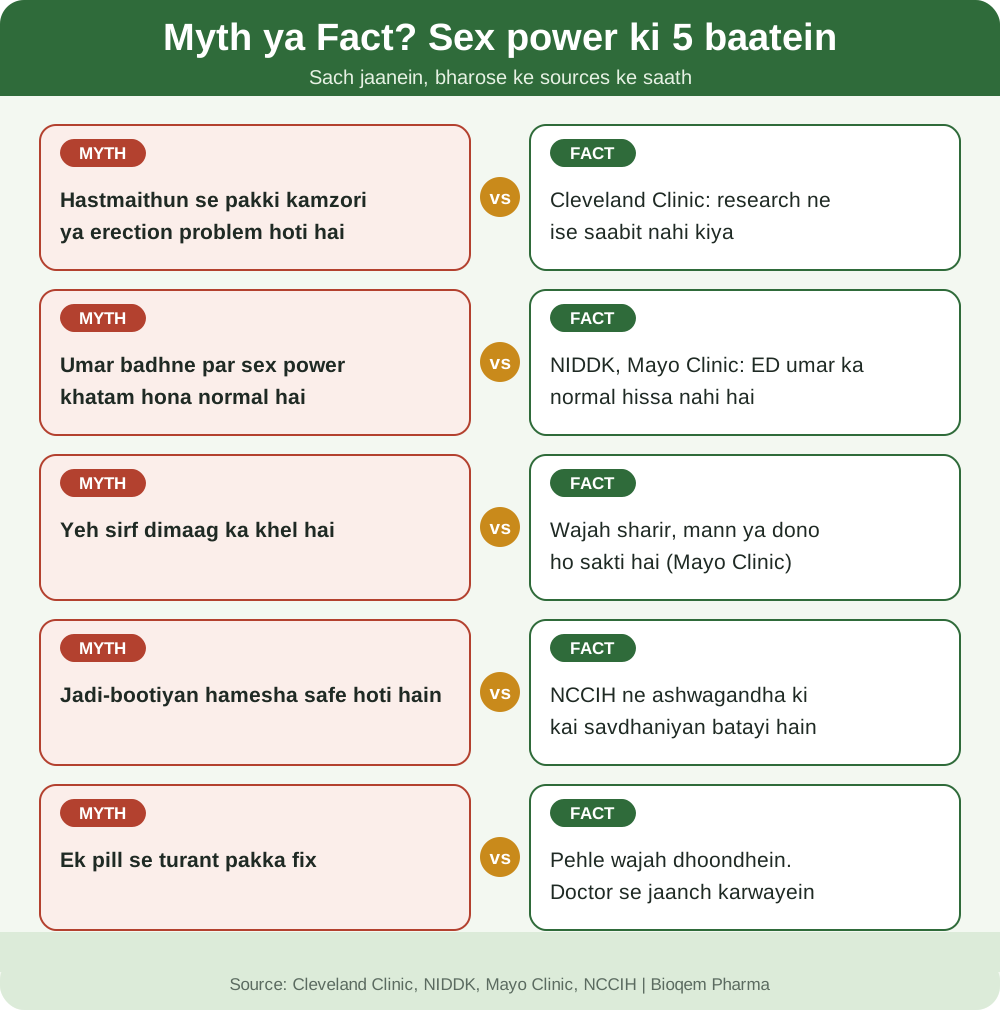
Videos aur chat groups mein ghoomte kai sex badhane ke upay facts par based nahi hote. Yeh sabse aam myths hain.

Myth Fact
Hastmaithun se pakki kamzori ya erection problem hoti hai. Cleveland Clinic ne erectile dysfunction, kam libido, kam sperm count aur infertility ko un cheezon mein ginaya hai jo hastmaithun se nahi hoti. Research ne inhein saabit nahi kiya.
Umar badhne par sex power khatam hona normal hai. NIDDK aur Mayo Clinic dono kehte hain ki erection ki problem umar ka normal hissa nahi hai.
Sirf budhe mardon ko problem hoti hai. NIDDK ke mutabik Amerika mein 40 saal ki umar mein lagbhag 4 mein se 10 mardon ko aur 70 saal tak lagbhag 7 mein se 10 mardon ko erection ki problem hoti hai. Yeh aam hai, aap akele nahi hain.
Yeh sirf dimaag ki baat hai. Mayo Clinic ke mutabik wajah sharirik, mansik ya dono ho sakti hai. Yeh kisi bimari ka sanket bhi ho sakti hai.
Jitna lamba, utna achha. Average samay lagbhag paanch minute hai. Bade farq normal hain.
Natural jadi-bootiyan hamesha safe hain. NCCIH ne ashwagandha ke liye liver, pregnancy aur dawaiyon ke takraav jaisi asli savdhaniyan batayi hain.
Ek pill ya powder se sab kuch turant theek ho jaata hai. Pehle wajah ka pata lagana zaroori hai. Doctor yeh dhoondh sakte hain. Jaldi ka fix diabetes jaisi bimari ko chhupa sakta hai.
Sex power ke myths aur facts: hastmaithun, umar, jadi-bootiyan aur pills
Myth ya Fact? Sex power ki 5 baatein

Guilt (apradh-bodh) bhi ek asli mudda hai. Cleveland Clinic ke mutabik kuch mard sanskritik ya dharmik soch ki wajah se sharm ya glani mehsoos karte hain. Aisa ho to counsellor madad kar sakte hain.

Wahin, Cleveland Clinic kehta hai ki kuch logon mein hastmaithun compulsive ho sakta hai. Agar isse kaam chhoot raha hai ya plans cancel ho rahe hain, to doctor se baat karein.

Kya umar ke saath sex power kam hota hai?

Thoda sa, haan, par ise khatam nahi hona chahiye. Mayo Clinic ke mutabik umar badhne par erection aane mein zyada samay lag sakta hai aur woh kam sakht ho sakta hai.

Mayo Clinic yeh bhi kehta hai ki erectile dysfunction umar ka aam hissa nahi hai. NIDDK bhi yahi kehta hai.

To normal badlav aur problem mein farq kaise karein? Normal badlav dheere aur chhota hota hai. Achanak ya bada badlav, kisi bhi umar mein, sehat ki jaanch ka kaaran hai.

Is page ke zyada-tar aankde Amerika aur UK ke sources se hain. Bharatiya mardon ka data kam hai, isliye apne doctor se baat karein.

Doctor ko kab dikhana chahiye?

Agar problem baar-baar ho, sirf ek-do baar nahi, to doctor ko dikhayein. Mayo Clinic kehta hai ki sharm ho tab bhi healthcare professional se baat karein. Kabhi-kabhi wajah ka ilaaj karne se hi problem door ho jaati hai.

Jaldi dikhayein agar:

  • aapko diabetes, dil ki bimari, high BP ya high cholesterol hai
  • early ya delayed ejaculation bhi hai
  • peshab normal se zyada baar aata hai
  • aap udaas ya chintit hain, ya rishta khinch raha hai
  • problem nayi dawai shuru karne ke baad shuru hui (dawai khud band na karein)
  • seene mein dard, saans phoolna ya behoshi ho (turant emergency care lein)

Kaun sa doctor? Shuru family doctor ya urologist (peshab aur purush prajanan tantra ke doctor) se karein. Kai log qualified Ayurveda ya Unani doctor se bhi salah lete hain. Har doctor ko apni sabhi dawaiyon aur jadi-bootiyon ke baare mein batayein.

Poori jaankari ke liye hamari guide padhein: Men’s Sexual Health: A Complete Guide in Simple Words.

Aksar poochhe jaane wale sawal (FAQ)

Kya main ghar par bina dawai ke sex power badha sakta hoon?

Haan, kai mardon ke liye roz ki aadatein pehla kadam hain. Poori neend lein, exercise karein, wazan sahi rakhein, tambaku chhodein, sharab kam karein aur stress sambhalein. Problem rahe to doctor ko dikhayein.

Sex ka normal time kitna hota hai?

Koi ek number nahi hai. Mayo Clinic ke mutabik average lagbhag paanch minute hai aur range bahut badi hai. Doctor tab chinta karte hain jab lagbhag har baar 1 se 3 minute mein ho jaaye aur aap pareshan hon.

Kya stress se sex power kam ho sakta hai?

Haan. Mayo Clinic ke mutabik stress aur mansik sehat ki problem erection ki dikkat la sakti hai ya badha sakti hai. NHS bhi stress aur thakan ko kabhi-kabhi ki dikkat ki aam wajah batata hai.

Kya kam sex power kisi bimari ka sanket ho sakta hai?

Kabhi-kabhi, haan. Mayo Clinic ke mutabik erection ki problem aisi sehat-sthiti ka sanket ho sakti hai jise ilaaj ki zaroorat hai, aur yeh dil ki bimari ka risk factor hai. Diabetes aur high BP bhi isse jude hain, isliye checkup sahi rahega.

Kya hastmaithun se sex power kam hota hai?

Iska koi saboot nahi hai. Cleveland Clinic ke mutabik research ne nahi dikhaya ki hastmaithun se erection ki dikkat hoti hai. Agar aap guilt mehsoos karte hain ya lagta hai yeh compulsive ho gaya hai, to healthcare provider se baat karein.

Kya shilajit aur ashwagandha sex power badhate hain?

Research limited hai. NCCIH ke mutabik ashwagandha se testosterone aur sperm quality par kuch limited evidence hai, par studies chhoti hain. Use karne se pehle doctor se poochhein, khaas kar agar aap regular dawai lete hain.

Kya doctor ki salah ke bina power wali dawai lena safe hai?

Nahi. Anjaan pill ke andar kya hai, aap pakka nahi jaante, aur woh doosri dawaiyon se takra sakti hai. Pehle doctor wajah dhoondhte hain, phir safe vikalp batate hain.

Kaun sa doctor dikhana chahiye, aur kab?

Jab problem baar-baar ho ya doosri sehat ki dikkaton ke saath aaye, tab dikhayein. Family doctor ya urologist achha pehla kadam hai. Qualified Ayurveda ya Unani doctor bhi salah de sakte hain, agar aap apni sabhi dawaiyon ke baare mein batayein.

Sources

Aur padhein

Yeh lekh sirf general shiksha ke liye hai. Yeh medical salah nahi hai aur kisi bimari ka nidan, ilaaj ya roktham nahi karta. Apni diet, routine ya dawaiyan badalne se pehle qualified doctor se baat karein.

PCOD Problem in Hindi: PCOD क्या होता है? आसान भाषा में पूरी जानकारी

छोटा जवाब: PCOD problem in Hindi में आसान शब्दों में समझें, तो PCOD (पॉलीसिस्टिक ओवेरियन डिज़ीज़) महिलाओं में हार्मोन से जुड़ी एक आम समस्या है। इसमें अंडाशय (ओवरी) हर महीने ठीक से अंडा नहीं छोड़ पाते। इससे पीरियड्स अनियमित हो सकते हैं, मुंहासे या चेहरे पर बाल आ सकते हैं और वज़न बढ़ सकता है। इसका अभी कोई पक्का इलाज नहीं है, लेकिन सही आदतों और डॉक्टर की मदद से इसे अच्छी तरह संभाला जा सकता है।

मुख्य बातें

  • PCOD बहुत आम है। भारत की सबसे बड़ी स्टडी में 7.2% से 19.6% महिलाओं में यह पाया गया।
  • WHO के अनुसार, दुनिया में लगभग 70% प्रभावित महिलाओं को पता ही नहीं होता कि उन्हें यह समस्या है।
  • डॉक्टर तब पहचान करते हैं जब 3 में से कम से कम 2 संकेत मिलें। अल्ट्रासाउंड में सिस्ट दिखना ज़रूरी नहीं है।
  • मई 2026 में PCOS का नया नाम PMOS रखा गया है। रोज़ की बातचीत में PCOD और PCOS शब्द अभी भी चलते हैं।
  • सही खाना, रोज़ की कसरत, अच्छी नींद और नियमित जांच से लक्षणों में काफी फ़र्क पड़ता है।

लेखक: Bioqem Pharma संपादकीय टीम। मेडिकल समीक्षा: [CONFIRM: डॉक्टर का नाम और योग्यता]। आखिरी समीक्षा: 8 अक्टूबर 2026।

PCOD क्या होता है? (PCOD problem in Hindi)

अगर आप सोच रही हैं कि पीसीओडी क्या है, तो सीधा जवाब यह है: PCOD एक हार्मोन से जुड़ी समस्या है, जिसमें अंडाशय हर महीने नियम से अंडा नहीं छोड़ पाते। आम तौर पर हर महीने एक अंडा पककर बाहर आता है। इसे ओव्यूलेशन (अंडा निकलना) कहते हैं।

PCOD में कई छोटे-छोटे अंडे (फॉलिकल) पूरी तरह पक नहीं पाते। ये अंडाशय में ही रुक जाते हैं। अल्ट्रासाउंड में ये छोटी थैलियों जैसे दिखते हैं, इसलिए लोग इन्हें “सिस्ट” कहते हैं।

साथ ही शरीर में एंड्रोजन (पुरुष हार्मोन, जो महिलाओं में भी थोड़ी मात्रा में होते हैं) बढ़ सकते हैं। कई महिलाओं में इंसुलिन भी ठीक से काम नहीं करता। इन सबका असर पीरियड्स, त्वचा, बाल और वज़न पर दिखता है।

एक उदाहरण से समझें: मान लीजिए 19 साल की प्रिया कॉलेज में पढ़ती है। उसके पीरियड्स कभी 45 दिन में आते हैं, कभी 2 महीने में। चेहरे पर मुंहासे भी बढ़ गए हैं। वह सोचती है कि यह पढ़ाई का तनाव है। ऐसे लक्षण PCOD की तरफ इशारा कर सकते हैं, इसलिए डॉक्टर से जांच कराना सही कदम है।

PCOD का फुल फॉर्म क्या है?

PCOD का फुल फॉर्म Polycystic Ovarian Disease (पॉलीसिस्टिक ओवेरियन डिज़ीज़) है। “Poly” का मतलब है कई, “cystic” का मतलब है थैली जैसी बनावट, और “ovarian” का मतलब है अंडाशय से जुड़ा।

PCOS का फुल फॉर्म Polycystic Ovary Syndrome है। भारत में दोनों शब्द अक्सर एक ही समस्या के लिए बोले जाते हैं। दुनिया भर के डॉक्टर मेडिकल नाम के रूप में PCOS का इस्तेमाल करते आए हैं। PCOD ज़्यादातर भारत में बोला जाने वाला आम शब्द है। नाम में “डिज़ीज़” होने की वजह से लोग इसे “PCOD disease in Hindi” या “पीसीओडी बीमारी” भी सर्च करते हैं, लेकिन यह कोई छूत की बीमारी नहीं है।

PCOS का नया नाम PMOS क्यों रखा गया?

मई 2026 में, दुनिया भर के विशेषज्ञों की सहमति से PCOS का नया नाम PMOS (Polyendocrine Metabolic Ovarian Syndrome) रखा गया। यह फैसला मेडिकल जर्नल The Lancet में प्रकाशित हुआ।

नाम बदलने की दो बड़ी वजहें हैं:

  • “सिस्ट” शब्द भ्रम पैदा करता था। असल में अंडाशय में बीमारी वाली गांठें नहीं होतीं, बल्कि अधपके अंडे होते हैं।
  • यह सिर्फ अंडाशय की समस्या नहीं है। यह हार्मोन (एंडोक्राइन) और मेटाबॉलिज़्म (शरीर में ऊर्जा और शुगर का इस्तेमाल) दोनों से जुड़ी है। नया नाम यही बताता है।

AAFP के अनुसार, अंतरराष्ट्रीय इलाज गाइडलाइंस में यह नया नाम 2028 तक अपनाए जाने की उम्मीद है। इसलिए अभी आपके डॉक्टर PCOD या PCOS ही बोलें, तो इसमें कोई गलती नहीं है। तीनों नाम एक ही तरह की समस्या की बात करते हैं।

भारत में PCOD कितना आम है?

भारत में PCOD काफी आम है। 9,000 से ज़्यादा महिलाओं पर हुई भारत की सबसे बड़ी स्टडी (JAMA Network Open, 2024) में यह 7.2% से 19.6% महिलाओं में पाया गया। आंकड़ा इस पर निर्भर करता है कि जांच के कौन से नियम अपनाए गए।

PCOD: आंकड़ों में

यह समस्या जितनी दिखती है, उससे कहीं ज़्यादा आम है

7.2% से 19.6%

भारत की महिलाओं में PCOD/PCOS
JAMA Network Open, 2024

10% से 13%

दुनिया में प्रजनन आयु की महिलाएं
WHO

70% तक

महिलाओं को पता ही नहीं होता
WHO

स्टडी में यह भी पाया गया कि शहरों में यह गांवों से ज़्यादा है, और मध्य व उत्तर भारत में सबसे ज़्यादा। NHS के अनुसार, एशियाई मूल की महिलाओं में इसका खतरा ज़्यादा होता है।

PCOD के लक्षण क्या हैं?

PCOD का सबसे आम लक्षण अनियमित पीरियड्स है। लेकिन हर महिला में लक्षण अलग होते हैं। किसी में बहुत हल्के होते हैं, किसी में साफ दिखते हैं।

PCOD के आम लक्षण

📅

अनियमित पीरियड्स

देर से, कम या बिल्कुल नहीं

💆

मुंहासे, तैलीय त्वचा

बार-बार होने वाले

🧔

चेहरे/शरीर पर बाल

ठुड्डी, होंठ, पेट पर

💇

सिर के बाल पतले

बाल झड़ना

⚖️

वज़न बढ़ना

खासकर पेट के आसपास

🌱

गर्भधारण में मुश्किल

अंडा नियम से न निकलना

🌑

गर्दन पर काले धब्बे

गर्दन या बगल में मोटी त्वचा

😞

थकान, उदासी

चिंता या मन उदास रहना

स्रोत: NHS, WHO

ये सारे लक्षण एक साथ होना ज़रूरी नहीं है। एक-दो लक्षण होने का मतलब यह भी नहीं कि आपको PCOD है ही। थायराइड जैसी दूसरी समस्याओं में भी ऐसे लक्षण दिख सकते हैं। इसलिए सही पहचान डॉक्टर की जांच से ही होती है।

PCOD क्यों होता है?

PCOD होने की असली वजह अभी पूरी तरह पता नहीं है। NHS के अनुसार, इसमें इंसुलिन और टेस्टोस्टेरोन जैसे हार्मोन ठीक से काम नहीं करते। कुछ बातें इसका खतरा बढ़ाती हैं:

  • परिवार में किसी को होना: मां या बहन को PCOD है, तो आपका खतरा ज़्यादा है।
  • इंसुलिन रेज़िस्टेंस: शरीर इंसुलिन का ठीक से इस्तेमाल नहीं कर पाता। तब शरीर ज़्यादा इंसुलिन बनाता है, जिससे एंड्रोजन बढ़ सकते हैं।
  • जीवनशैली: कम चलना-फिरना, ज़्यादा मीठा और पैकेट वाला खाना, और नींद की कमी लक्षणों को बढ़ा सकते हैं।
  • एशियाई मूल: भारतीय महिलाओं में इसका खतरा ज़्यादा माना जाता है।

एक बात साफ समझ लें: PCOD किसी गलती या “कमज़ोरी” की वजह से नहीं होता। इसमें शर्म की कोई बात नहीं है।

PCOD की जांच कैसे होती है?

PCOD (PCOS) की पहचान के लिए कोई एक टेस्ट नहीं होता। WHO के अनुसार, डॉक्टर तब यह मानते हैं जब नीचे दिए 3 में से कम से कम 2 संकेत हों, और बाकी वजहें जांच से हटा दी गई हों।

पहचान का नियम: 3 में से 2

इनमें से कोई भी 2 संकेत हों, तो डॉक्टर PCOD/PCOS मान सकते हैं

1

अनियमित पीरियड्स

अंडा नियम से नहीं निकलता

2

पुरुष हार्मोन ज़्यादा

मुंहासे, अनचाहे बाल, या खून की जांच में

3

अल्ट्रासाउंड में बदलाव

अंडाशय में कई छोटे फॉलिकल

ध्यान दें: अल्ट्रासाउंड में “सिस्ट” दिखना ज़रूरी नहीं है। स्रोत: WHO

डॉक्टर आम तौर पर ये जांच करवा सकते हैं:

जांच क्यों की जाती है
LH, FSH हार्मोन अंडाशय के काम करने का तरीका समझने के लिए
टेस्टोस्टेरोन (पुरुष हार्मोन) एंड्रोजन बढ़ा है या नहीं, देखने के लिए
थायराइड (TSH) और प्रोलैक्टिन ऐसी दूसरी समस्याएं हटाने के लिए जिनके लक्षण मिलते-जुलते हैं
ब्लड शुगर और इंसुलिन डायबिटीज़ या इंसुलिन रेज़िस्टेंस का खतरा देखने के लिए
कोलेस्ट्रॉल दिल की सेहत के लिए
पेल्विक अल्ट्रासाउंड अंडाशय और गर्भाशय की परत देखने के लिए

किशोर लड़कियों में शुरुआती कुछ सालों तक पीरियड्स थोड़े ऊपर-नीचे होना आम है। NHS के अनुसार, अल्ट्रासाउंड आम तौर पर 18 साल से ऊपर की महिलाओं में ही इस्तेमाल होता है। इसलिए कम उम्र में जल्दबाज़ी में कोई ठप्पा न लगाएं, बल्कि डॉक्टर की सलाह लें।

PCOD और PCOS में क्या अंतर है?

आम बोलचाल में PCOD और PCOS एक ही समस्या के लिए बोले जाते हैं। कई वेबसाइटें PCOD को “हल्का” और PCOS को “गंभीर” बताती हैं, लेकिन मेडिकल गाइडलाइंस में ऐसे दो अलग रोग नहीं माने जाते। दुनिया भर में डॉक्टर PCOS (अब PMOS) के नियमों से ही जांच करते हैं।

बात PCOD PCOS / PMOS
शब्द कहां चलता है ज़्यादातर भारत में, आम बोलचाल में दुनिया भर में मेडिकल नाम
पहचान का तरीका कोई अलग मेडिकल नियम नहीं 3 में से 2 संकेत (WHO)
किस चीज़ पर असर पीरियड्स, अंडाशय, त्वचा पीरियड्स, हार्मोन, शुगर, दिल और मन
देखभाल दोनों में एक जैसी: सही आदतें, नियमित जांच, ज़रूरत पड़ने पर डॉक्टर की दवा

सीधी बात: नाम पर उलझने से ज़्यादा ज़रूरी है लक्षणों को पहचानना और जांच कराना।

PCOD से आगे चलकर कौन से खतरे हो सकते हैं?

PCOD जानलेवा नहीं है, लेकिन ध्यान न दें तो लंबे समय में कुछ खतरे बढ़ सकते हैं। WHO के अनुसार इनमें ये शामिल हैं:

  • टाइप 2 डायबिटीज़ और इंसुलिन रेज़िस्टेंस
  • हाई ब्लड प्रेशर, बढ़ा कोलेस्ट्रॉल और दिल की बीमारी
  • गर्भावस्था में शुगर (जेस्टेशनल डायबिटीज़) या हाई BP
  • लिवर में चर्बी (फैटी लिवर) और नींद में सांस रुकना (स्लीप एप्निया)
  • बहुत कम पीरियड्स आने पर गर्भाशय की परत मोटी होना (एंडोमेट्रियल हाइपरप्लेसिया)
  • चिंता, उदासी और अपने शरीर को लेकर बुरा महसूस करना

अच्छी खबर यह है कि समय पर जांच और सही आदतों से इन खतरों को काफी कम किया जा सकता है।

PCOD को कैसे संभालें?

PCOD का अभी कोई पक्का इलाज (cure) नहीं है, लेकिन इसे अच्छी तरह संभाला जा सकता है। WHO कहता है कि अच्छा खाना और रोज़ की शारीरिक गतिविधि हर महिला के लिए फायदेमंद है, चाहे वज़न कम हो या न हो।

PCOD में रोज़ की 6 अच्छी आदतें

छोटे कदम, हर दिन

🥗थाली में दाल, सब्ज़ी, साबुत अनाज, प्रोटीन
🍬कम करें: मीठा, मैदा, तला और पैकेट वाला खाना
🚶रोज़ 30 मिनट तेज़ चलना, योग या डांस
😴7 से 8 घंटे की नींद
🧘तनाव कम करें: प्राणायाम, धीमी सांस
📅पीरियड्स नोट करें और नियमित जांच कराएं

डॉक्टर कैसे मदद करते हैं: लक्षणों के हिसाब से डॉक्टर पीरियड्स नियमित करने, अनचाहे बाल या मुंहासे कम करने, इंसुलिन सुधारने या गर्भधारण में मदद के लिए दवा दे सकते हैं (NHS)। ये दवाएं हर महिला के लिए अलग होती हैं, इसलिए कोई भी दवा खुद से न लें।

एक उदाहरण: मान लीजिए 28 साल की नेहा ऑफिस में दिन भर बैठकर काम करती है और देर रात तक फोन चलाती है। अगर वह रोज़ शाम को 30 मिनट तेज़ चले, मीठी चाय और बिस्किट कम करे, और समय पर सोए, तो कुछ महीनों में उसे अपने पीरियड्स और ऊर्जा में फ़र्क दिख सकता है। हर शरीर अलग होता है, इसलिए धैर्य रखें।

आयुर्वेद PCOD को कैसे देखता है?

आयुर्वेद में PCOD नाम से कोई अलग रोग नहीं लिखा गया है। आयुर्वेद इसे मासिक धर्म (आर्तव) और शरीर के दोषों, खासकर कफ और वात (शरीर की भारीपन और गति वाली ऊर्जा), के असंतुलन के रूप में समझता है।

आयुर्वेद में सबसे ज़्यादा ज़ोर दिनचर्या (रोज़ का सही रूटीन), हल्के और ताज़े खाने, नियमित व्यायाम और तनाव कम करने पर है। ये वही आदतें हैं जिन्हें आज का विज्ञान भी फायदेमंद मानता है।

शतावरी जैसी कुछ जड़ी-बूटियां पारंपरिक रूप से महिलाओं की सेहत के लिए इस्तेमाल होती रही हैं। लेकिन PCOD पर इनकी मज़बूत रिसर्च अभी कम है। किसी भी आयुर्वेदिक या यूनानी दवा को:

  • सिर्फ योग्य डॉक्टर (BAMS/BUMS) की सलाह से लें।
  • प्रेगनेंसी, स्तनपान या गर्भधारण की कोशिश के दौरान बिना डॉक्टर के न लें।
  • अगर आप थायराइड, शुगर या कोई और दवा ले रही हैं, तो डॉक्टर को ज़रूर बताएं।
  • ऐसी कंपनी से ही लें जो हर बैच की लैब जांच (हेवी मेटल्स आदि) की रिपोर्ट दिखा सके।

जो भी प्रोडक्ट “जड़ से इलाज” या “बिना साइड इफेक्ट” का वादा करे, उससे सावधान रहें। आयुर्वेद के इतिहास के बारे में और जानने के लिए पढ़ें: आयुर्वेद का इतिहास।

PCOD से जुड़े मिथक और सच

मिथक सच
शादी के बाद PCOD अपने आप ठीक हो जाता है। शादी से PCOD पर कोई असर नहीं पड़ता। देखभाल हमेशा ज़रूरी है।
सिर्फ मोटी महिलाओं को PCOD होता है। पतली महिलाओं को भी PCOD हो सकता है।
अल्ट्रासाउंड में सिस्ट नहीं, तो PCOD नहीं। सिस्ट दिखना ज़रूरी नहीं है (WHO)।
PCOD है तो कभी मां नहीं बन सकतीं। कई महिलाएं PCOD के साथ गर्भधारण करती हैं, कुछ को डॉक्टर की मदद लगती है।
PCOD लड़की की किसी गलती से होता है। इसके पीछे हार्मोन, परिवार और जीवनशैली जैसी कई वजहें हैं।
कोई जड़ी-बूटी PCOD को जड़ से खत्म कर देती है। अभी PCOD का कोई पक्का इलाज नहीं है (WHO)।

डॉक्टर को कब दिखाएं?

अगर आपको PCOD का शक है, या लक्षण आपके रोज़ के जीवन पर असर डाल रहे हैं, तो डॉक्टर से मिलें। इन हालात में जल्दी दिखाएं:

  • 3 महीने या उससे ज़्यादा समय से पीरियड्स न आए हों (और प्रेगनेंसी न हो)
  • बहुत ज़्यादा या बहुत लंबे समय तक खून आना
  • चेहरे या शरीर पर बाल बहुत तेज़ी से बढ़ना, या आवाज़ भारी होना
  • एक साल कोशिश के बाद भी गर्भधारण न होना (35 साल से ऊपर हों तो 6 महीने बाद)
  • गर्दन या बगल में काले, मोटे धब्बे, बहुत प्यास या बार-बार पेशाब
  • लगातार उदासी, चिंता या खुद को नुकसान पहुंचाने के विचार आना

किस डॉक्टर के पास जाएं? सबसे पहले स्त्री रोग विशेषज्ञ (गायनेकोलॉजिस्ट) से मिलें। ज़रूरत हो तो वे आपको हार्मोन विशेषज्ञ (एंडोक्राइनोलॉजिस्ट), डाइटीशियन, त्वचा विशेषज्ञ या मन के डॉक्टर के पास भेज सकते हैं।

PCOD से जुड़े अक्सर पूछे जाने वाले सवाल

PCOD का फुल फॉर्म क्या है?

PCOD का फुल फॉर्म Polycystic Ovarian Disease (पॉलीसिस्टिक ओवेरियन डिज़ीज़) है। मेडिकल भाषा में इसे PCOS कहा जाता रहा है, और मई 2026 से इसका नया नाम PMOS है।

PCOD किस उम्र में होता है?

PCOD अक्सर किशोर उम्र या 20 की उम्र के आसपास शुरू होता है, जब पीरियड्स शुरू होते हैं। यह प्रजनन आयु की किसी भी महिला को हो सकता है, और लक्षण उम्र के साथ बदल सकते हैं।

क्या पतली महिलाओं को भी PCOD हो सकता है?

हां, पतली महिलाओं को भी PCOD हो सकता है। वज़न बढ़ना एक आम लक्षण है, लेकिन हर महिला में नहीं होता।

क्या PCOD पूरी तरह ठीक हो सकता है?

WHO के अनुसार अभी PCOS (PCOD) का कोई पक्का इलाज नहीं है। लेकिन सही खाना, कसरत, नींद और डॉक्टर की मदद से लक्षणों को अच्छी तरह संभाला जा सकता है और कई महिलाएं सामान्य जीवन जीती हैं।

क्या शादी के बाद PCOD ठीक हो जाता है?

नहीं, यह एक आम मिथक है। शादी से हार्मोन की यह समस्या नहीं बदलती, इसलिए शादी से पहले और बाद दोनों समय देखभाल ज़रूरी है।

क्या PCOD में प्रेगनेंसी हो सकती है?

हां, कई महिलाएं PCOD के साथ गर्भधारण करती हैं। अंडा नियम से न निकलने के कारण कुछ महिलाओं को ज़्यादा समय या डॉक्टर की मदद लग सकती है।

क्या PCOD से डायबिटीज़ हो सकती है?

PCOD में टाइप 2 डायबिटीज़ का खतरा बढ़ जाता है, क्योंकि कई महिलाओं में इंसुलिन ठीक से काम नहीं करता। इसलिए समय-समय पर ब्लड शुगर की जांच कराना अच्छा है।

क्या तनाव से PCOD बढ़ सकता है?

तनाव से PCOD होता नहीं, लेकिन यह नींद, खाने की आदतों और हार्मोन पर असर डालकर लक्षण बढ़ा सकता है। प्राणायाम, टहलना और अच्छी नींद मदद करते हैं।

क्या PCOD खतरनाक बीमारी है?

PCOD जानलेवा नहीं है। लेकिन लंबे समय तक ध्यान न दें तो डायबिटीज़, दिल की बीमारी और गर्भाशय की परत से जुड़े खतरे बढ़ सकते हैं, इसलिए नियमित जांच ज़रूरी है।

क्या PCOS को अब PMOS कहा जाता है?

हां, मई 2026 में The Lancet में प्रकाशित वैश्विक सहमति के बाद PCOS का नया नाम PMOS (Polyendocrine Metabolic Ovarian Syndrome) रखा गया। गाइडलाइंस में इसे 2028 तक अपनाने की उम्मीद है, इसलिए अभी PCOD और PCOS नाम भी चलते रहेंगे।

स्रोत

अगर आप महिलाओं की सेहत के लिए हमारे आयुर्वेदिक और यूनानी प्रोडक्ट देखना चाहें, तो हमारी महिलाओं की सेहत की रेंज देख सकती हैं।

यह लेख केवल सामान्य जानकारी के लिए है। यह मेडिकल सलाह नहीं है और किसी रोग की पहचान, इलाज, रोकथाम या उसे ठीक करने का दावा नहीं करता। अपने खाने, दिनचर्या या दवाओं में कोई भी बदलाव करने से पहले योग्य डॉक्टर से सलाह लें।

Men’s Sexual Health: A Complete Guide in Simple Words

Quick answer: Men’s sexual health means your body, mind and relationships all work well together in your sex life. It covers desire, erections, ejaculation, fertility and safe sex. Most problems are common and many are linked to stress, sleep, weight, blood sugar or heart health. Simple daily habits help, and a doctor can help when problems keep coming back.

Key takeaways

  • Most men face a sexual problem at some point. It is nothing to feel ashamed of.
  • Your mind matters as much as your body. Stress and worry can affect erections and desire.
  • Erection problems can be an early sign of diabetes or heart disease, so don’t ignore them.
  • Sleep, exercise, good food and less alcohol and smoking support sexual health.
  • Ayurveda and Unani have long traditions here, but herbs need care, quality checks and a doctor’s advice.

Written by the Bioqem Pharma editorial team. Medically reviewed by [CONFIRM: reviewer name and qualification]. Last reviewed: 7 October 2026.

What is men’s sexual health?

Men’s sexual health is how well your body, mind and relationship support a satisfying and safe sex life. It is not only about “performance”. It includes how you feel about sex, how you talk with your partner, and how you protect each other.

Doctors usually think about five parts:

  • Desire: your interest in sex, also called libido.
  • Erection: getting and keeping an erection firm enough for sex.
  • Ejaculation and control: the timing feels right for you and your partner.
  • Fertility: healthy sperm, if you want children. This is also called male reproductive health.
  • Safety and comfort: safe sex, no pain, and a relationship where both people feel respected.

When one part slips, the others often follow. A bad week of stress can lower desire. Worry about that can then affect erections. The good news? The same simple habits support all five parts.

What are the most common sexual problems in men?

The most common ones are erection problems, early ejaculation and low desire. Fertility worries and performance anxiety are also common. Almost every man faces one of these at some point. One bad night is normal. A problem that keeps coming back for weeks is worth looking at.

Problem What it feels like Common reasons
Erectile dysfunction (ED) Trouble getting or keeping an erection Stress, diabetes, high blood pressure, smoking, some medicines
Premature (early) ejaculation Ejaculating sooner than you or your partner want Anxiety, excitement, relationship stress, habit
Low libido Little or no interest in sex Tiredness, stress, depression, low testosterone
Performance anxiety Worry about “doing well” that ruins the moment Past bad experience, pressure, comparison with porn
Fertility concerns Trying for a baby for a year with no success Low sperm count, heat, smoking, alcohol, health conditions
Curved or painful erection A bend or lump in the penis, or pain Scar tissue after minor injury (Peyronie’s disease)

Each of these has its own guide on our blog, and we will keep adding more. Start with the problem that worries you most.

What causes these problems?

Sexual problems usually come from a mix of body, mind and lifestyle reasons. It is rarely just one thing. The US National Institute of Diabetes and Digestive and Kidney Diseases lists many common causes of erection problems. These include diabetes, heart disease, anxiety, depression, some medicines, low testosterone, smoking and heavy drinking.

Body reasons: An erection needs good blood flow, healthy nerves and balanced hormones. Diabetes, high blood pressure, high cholesterol and obesity can damage the small blood vessels. Some medicines for blood pressure, depression or allergies can also play a part.

Mind reasons: Your brain starts every erection. Stress at work, money worries, depression or a fight with your partner can switch off desire. Fear of failing can turn one bad night into a pattern.

Lifestyle reasons: Poor sleep, long hours sitting, little exercise, smoking, alcohol and junk food all add up.

Think of Ravi, a 32-year-old software engineer. He works late, sleeps five hours, skips the gym and drinks most weekends. His desire has dropped and he feels “tired all the time”. Nothing is “broken”. His body is just running on empty.

Why can erection problems be an early health warning?

Erection problems can be one of the first signs of heart disease or diabetes. The blood vessels in the penis are small. They often show damage before the bigger vessels around the heart do. Mayo Clinic notes that erection problems can be a sign of a health condition that needs care, and a risk factor for heart disease.

So if erections become weak or difficult again and again, don’t just hide it. Ask your doctor to check:

  • Blood sugar (for diabetes)
  • Blood pressure
  • Cholesterol
  • Weight and waist size
  • Thyroid and testosterone, if your doctor feels it is needed

Many men in India skip this step because of shame. That is a real loss. A simple blood test can catch a health problem early, when it is easier to manage.

How does sexual health change with age?

Sexual health changes slowly with age, but a good sex life is possible at every stage. Erection problems become more common as men get older, mostly because of blood vessel and blood sugar changes. Age alone is not the full story. Lifestyle matters a lot.

Age What often changes What helps most
20s Problems are mostly linked to anxiety, inexperience or habits Learn the facts, talk openly, limit alcohol and porn
30s Work stress, poor sleep and weight gain start to show Sleep 7 to 8 hours, exercise, manage stress
40s Blood pressure, blood sugar and belly fat may rise Yearly health check-ups, active lifestyle, less smoking and drinking
50s and beyond Erections may need more touch and time; testosterone may dip Patience, open talk with your partner, regular medical care

Picture a man like Suresh, 48, who has had diabetes for six years. He notices weaker erections and feels embarrassed. His best first step is a visit to his doctor to check his sugar control. A daily walk helps too. Every person is different, but this is why the body check comes first.

How do Ayurveda and Unani see men’s sexual wellness?

Ayurveda and Unani see a man’s sexual wellness as a sign of good overall health, not a separate problem. Both systems say strong digestion, good sleep, a calm mind and healthy food build sexual strength.

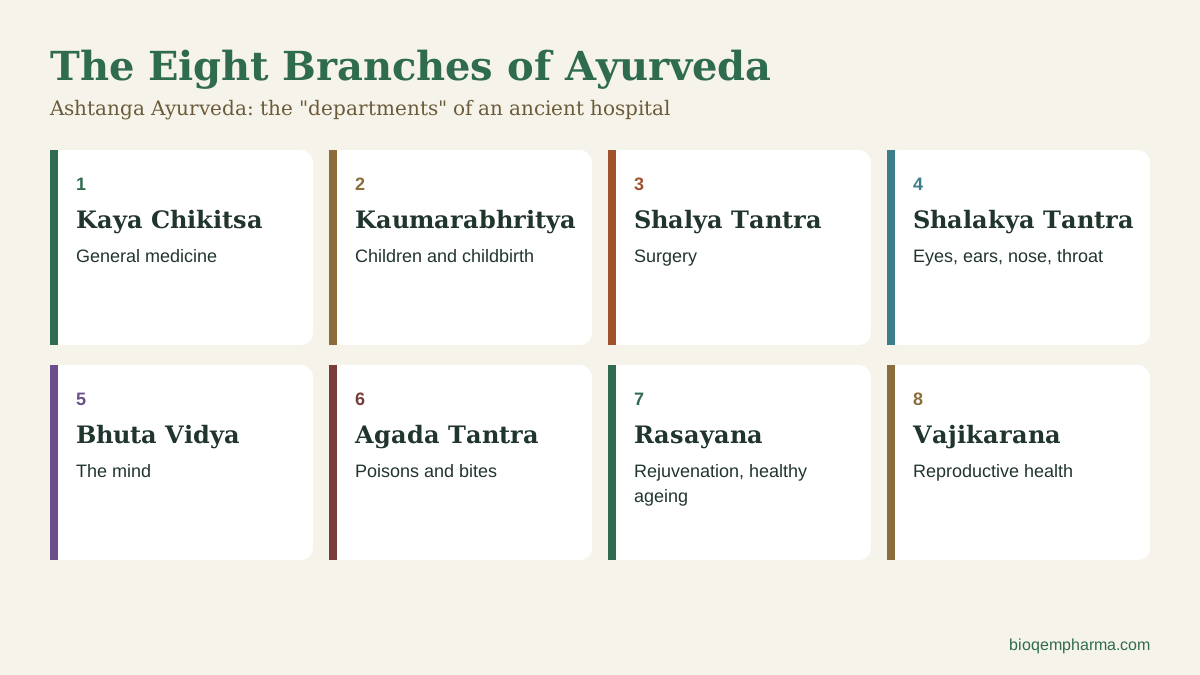
In Ayurveda, this branch is called Vajikarana (therapies for sexual vigour and healthy children). The word comes from “vaji”, meaning horse, a symbol of strength. Ayurveda links sexual health to Shukra dhatu (the reproductive tissue, the last and most refined body tissue). A review in the Indian Journal of Psychiatry explains that Vajikarana uses diet, daily routine, cleansing, oil massage and herbal mixes together. It also says many of these formulas have not been tested in strong scientific studies.

In Unani, sexual strength is called Quwwat-e-Bah (the power of sexual function). Unani doctors look at your Mizaj (body temperament) and use diet, lifestyle and traditional preparations such as Majoon (herbal jams) to support balance.

Our honest view: these traditions offer useful habits for daily life. But herbs are not magic, and they don’t replace a medical check-up. If you’re curious about how these systems began, read our guide to the history of Ayurveda.

Which herbs are traditionally used for male sexual health, and are they safe?

Ashwagandha, shilajit, safed musli, kaunch beej and gokshura are the herbs most often used in Ayurveda for men’s vigour. Some have small modern studies, but research is still limited. Quality and safety matter more than any promise on a label.

Herb Traditionally used for What to keep in mind
Ashwagandha (Indian winter cherry) Stress, energy, strength Small studies only; rare liver problems reported; check with a doctor if you have thyroid issues
Shilajit (mineral resin from mountain rocks) Energy and vitality Raw shilajit can contain heavy metals; use only purified, lab-tested products
Safed musli Strength and vigour Limited modern research
Kaunch beej (Mucuna pruriens) Vigour and fertility support Contains L-dopa; avoid with Parkinson’s or mental health medicines unless a doctor approves
Gokshura (Tribulus terrestris) Urinary and reproductive health Evidence is mixed

The US National Center for Complementary and Integrative Health notes that ashwagandha seems safe for short-term use, but rare cases of liver injury have been reported. It may also interact with medicines for diabetes, blood pressure and thyroid.

Three safety rules for any herb:

  1. Talk to a qualified Ayurvedic or Unani doctor first, especially if you take regular medicines.
  2. Choose products with lab test reports for heavy metals and hidden steroids. At Bioqem, we test every batch for these and share reports on request.
  3. Stay away from “instant” or “power” pills sold without proper labels. The US FDA has found many such products with hidden prescription drugs that can be dangerous, especially for heart patients.

These herbs are meant for adult men. Keep them away from children, and don’t share them with a pregnant or breastfeeding partner.

What daily habits improve sexual health?

The habits that keep your heart healthy also keep your sex life healthy. You don’t need big changes. Small steps, done every day, work best.

  • Move every day. Brisk walking, cycling, swimming or yoga for 30 minutes improves blood flow.
  • Train your pelvic floor. These are the muscles you use to stop urine midway. Squeeze for 3 seconds, relax for 3 seconds, 10 times, a few times a day. A 2019 review in the journal Physiotherapy found these exercises can help with both erection problems and early ejaculation.
  • Sleep 7 to 8 hours. Short sleep drains energy, mood and desire.
  • Eat real food. Fruits, vegetables, dals, nuts, seeds, whole grains and enough protein support male reproductive health. Cut down on sugar, fried food and packaged snacks.
  • Drink less, quit smoking. Smoking damages blood vessels. Too much alcohol can weaken erections.
  • Handle stress. Try 10 minutes of slow breathing, pranayama or a walk without your phone.
  • Talk to your partner. Honest, kind talk reduces pressure on both of you. Sex is a team activity, not a test.

Picture Ali, a 27-year-old sales executive who is newly married and worried about finishing too early. Pelvic floor exercises, less late-night screen time and an open talk with his wife can lower the pressure he feels. For many men, that alone makes a real difference.

Why does safe sex matter for men?

Safe sex protects you and your partner from infections that often show no signs at all. The World Health Organization says more than 1 million curable sexually transmitted infections (STIs) are picked up every day worldwide. Chlamydia, gonorrhoea, syphilis and trichomoniasis are the most common curable ones.

  • Use condoms correctly and every time with a new or casual partner.
  • Get tested if you have a new partner, burning while passing urine, discharge, sores or rashes.
  • Ask your doctor about hepatitis B and HPV vaccines.
  • Don’t self-medicate with antibiotics. Get the right test first.

Men’s sexual health: myths vs facts

Myth Fact
Losing semen makes a man weak. Semen is made all the time. Normal ejaculation does not drain your strength.
Real men never have erection problems. Most men have them at some point. It is common, not a weakness.
Sexual problems are only “in the head”. They are often linked to blood sugar, blood pressure, hormones or medicines.
Penis size decides a good sex life. Comfort, connection and communication matter far more.
Herbal means 100% safe. Herbs can have side effects and can mix badly with medicines. Quality matters.
Older men can’t enjoy sex. Many men stay sexually active into old age with good health habits.

When should you see a doctor?

See a doctor if a sexual problem lasts more than a few weeks, keeps coming back, or worries you. The NHS advises seeing a doctor if erection problems keep happening. Go sooner if you notice any of these red flags:

  • Erection problems along with chest pain, breathlessness or leg pain when walking
  • Pain, a lump or a new bend in the penis
  • Blood in urine or semen
  • Burning, discharge, sores or rashes in the genital area
  • A lump or swelling in the testicles
  • No pregnancy after one year of regular unprotected sex
  • Low mood, loss of interest in life, or thoughts of self-harm

Which doctor should you see?

Doctor See them for
Family doctor (GP) A first check-up, blood tests, referral
Urologist or andrologist Erection problems, curved penis, testicle problems, fertility
Endocrinologist Diabetes, thyroid or hormone problems
Psychiatrist or sex therapist Anxiety, depression, relationship or performance worries
BAMS (Ayurveda) or BUMS (Unani) doctor Diet, routine and traditional herbal support, alongside medical care

Frequently asked questions

Are sexual problems in men common?

Yes, they are very common. Most men face erection problems, early ejaculation or low desire at some point. Often the cause is stress, tiredness or a health issue that can be managed.

Is it normal for sex drive to drop with age?

Some drop in desire is normal as you get older, but it should not disappear suddenly. A sharp fall can be linked to low testosterone, depression, medicines or poor sleep. A doctor can help find the reason.

How long does sex usually last for men?

There is no fixed “normal” time. What matters is whether you and your partner feel satisfied. Do you often finish much sooner than you both want, and does it upset you? Then the NHS suggests simple techniques and a talk with a doctor.

Can stress really affect erections?

Yes. Stress releases hormones that tighten blood vessels and switch off arousal. Worry about one bad night can also create a cycle of fear. Managing stress often helps.

Can diabetes or high blood pressure affect sexual health?

Yes. Both can damage the small blood vessels and nerves needed for an erection. Good control of sugar and blood pressure protects your sexual health too.

What foods support male sexual health?

Foods that are good for your heart are good for your sexual health. Think fruits, vegetables, dals, nuts, seeds, whole grains and fish if you eat it. No single “magic food” works on its own.

Are Ayurvedic herbs for men safe to take?

They can be safe when they are pure, lab-tested and taken with a doctor’s advice. Some herbs can mix badly with medicines for diabetes, blood pressure or thyroid. Always tell your doctor what you take.

Which doctor should I see for sexual problems?

Start with your family doctor for a basic check-up and blood tests. They may send you to a urologist, an endocrinologist or a therapist. A BAMS or BUMS doctor can guide you on diet and traditional support alongside this.

Sources

If you’d like to see the Ayurvedic and Unani products we make for men, you can browse our men’s health range.

This article is for general education only. It is not medical advice and does not diagnose, treat, cure or prevent any disease. Please talk to a qualified doctor before you change your diet, routine or medicines.
History of Ayurveda: Origin, Timeline and Key Texts

Quick answer: The history of Ayurveda begins with healing hymns in the Vedas, especially the Atharvaveda. Its main ideas were written down in great Sanskrit books like the Charaka Samhita and Sushruta Samhita, mostly between about 400 BCE and 500 CE. Ayurveda then spread across Asia, declined under British rule, and was revived in modern India under the Ministry of AYUSH.

Key takeaways

  • Ayurveda means “knowledge of life”. It grew from Vedic ideas, Buddhist-era medicine and centuries of practice.
  • Tradition says Ayurveda is over 5,000 years old. Historians date its main written books to roughly 400 BCE to 700 CE.
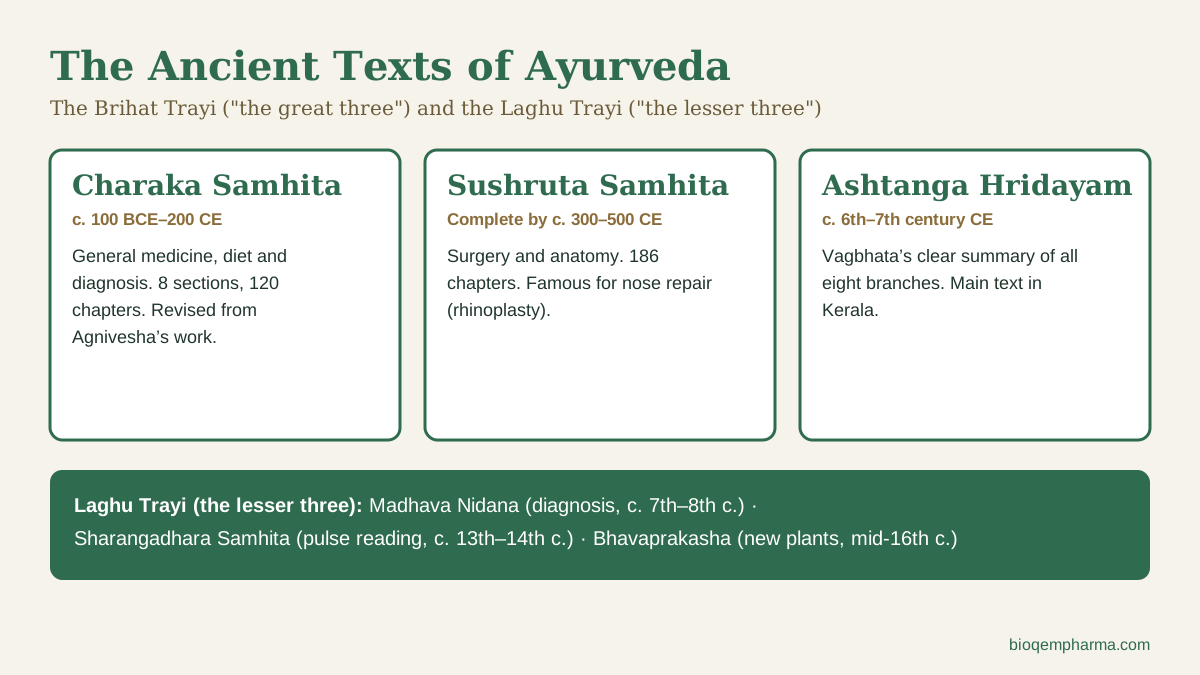
  • Three great books, the Charaka Samhita, Sushruta Samhita and Ashtanga Hridayam, are still studied by Ayurveda students today.
  • Ayurveda travelled to Sri Lanka, Tibet, Central Asia and Baghdad. It also met Unani medicine in medieval India.
  • After a sharp fall in British times, Ayurveda was revived. Today India has a full Ministry of AYUSH, and the WHO runs a traditional medicine centre in Jamnagar.

Written by the Bioqem Pharma editorial team. Last reviewed: 6 October 2026.

What is Ayurveda?

Ayurveda is India’s traditional system of health and medicine. The word joins two Sanskrit words: ayus (life) and veda (knowledge). So Ayurveda simply means “the knowledge of life”.

The Charaka Samhita, one of its oldest books, gives a lovely definition. It says Ayurveda is the science that tells us what is good and bad for life, what makes life happy or unhappy, and how long life can last (Charaka Samhita, Sutra Sthana 1.41).

Notice something here. The definition talks about a good life, not only about illness. That idea of staying well first runs through the whole history of Ayurveda.

Ayurveda looks at the body through three doshas (body energies): Vata (air and movement), Pitta (fire and digestion) and Kapha (water and structure). It also gives a lot of weight to daily routine, food, sleep and the seasons.

A simple example: think of a school student who eats late, sleeps late and skips breakfast. An Ayurvedic teacher 2,000 years ago would first look at that routine before reaching for any medicine. That habit-first thinking is one of the oldest parts of Ayurveda.

Ayurveda timeline at a glance

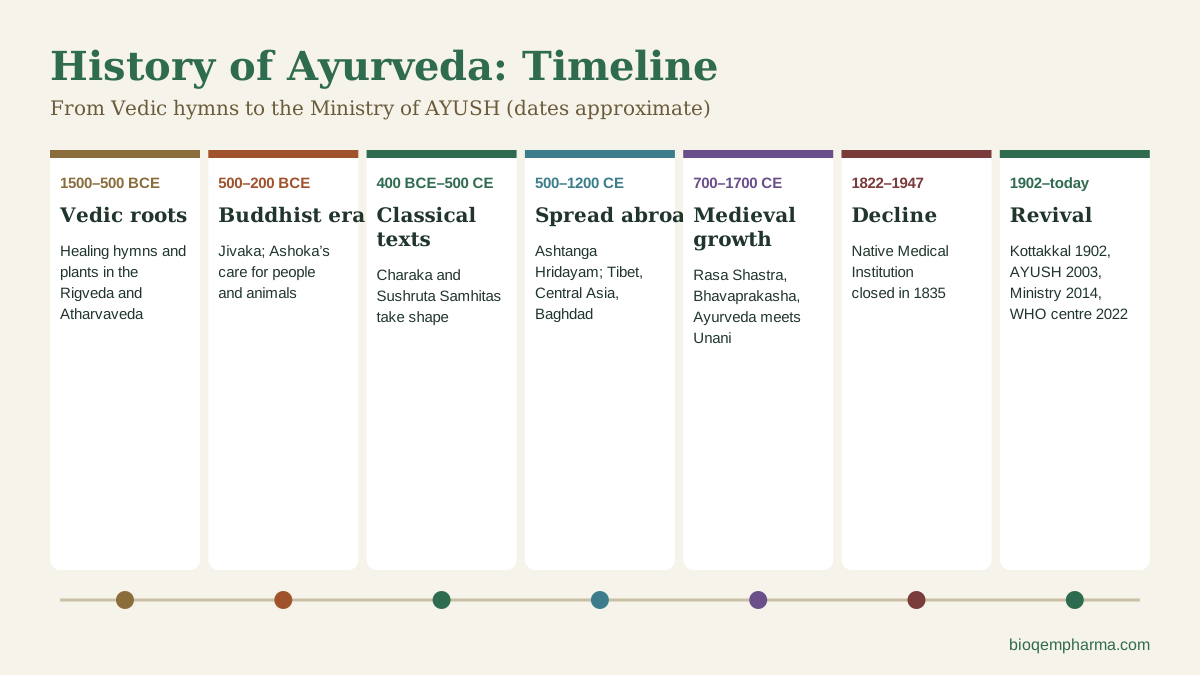
History of Ayurveda timeline infographic from Vedic period to Ministry of AYUSH
A simple timeline of the history of Ayurveda, from Vedic hymns to today (dates approximate).

Here is the whole Ayurveda timeline in one table. Dates for ancient texts are approximate, because scholars still debate them.

PeriodApproximate datesWhat happened
PrehistoryAbout 7,500 to 9,000 years agoPeople at Mehrgarh (in today’s Pakistan) drilled teeth with flint tools. This is early healing, not yet Ayurveda.
Vedic periodAbout 1500 to 500 BCEHealing hymns and plant knowledge appear in the Rigveda and the Atharvaveda.
Buddhist eraAbout 500 to 200 BCEPhysicians like Jivaka. Emperor Ashoka (268 to 232 BCE) arranges medical care for people and animals.
Classical eraAbout 400 BCE to 500 CEThe Charaka Samhita and Sushruta Samhita take shape in layers.
Early medievalAbout 500 to 700 CEThe Bower Manuscript (500 to 550 CE). Vagbhata writes the Ashtanga Hridayam.
Spread abroadAbout 700 to 1200 CETranslations into Arabic, Persian and Tibetan. Indian doctors work in Baghdad.
Medieval IndiaAbout 700 to 1700 CEMadhava Nidana, Sharangadhara Samhita, Bhavaprakasha. Rasa Shastra grows. Unani arrives and both systems live side by side.
Colonial period1757 to 1947Native Medical Institution opens in 1822 and closes in 1835. Ayurveda loses state support.
RevivalLate 1800s to 1947New Ayurvedic schools and pharmacies, such as Arya Vaidya Sala, Kottakkal (1902).
Independent India1947 to todayCentral Council of Indian Medicine (1971), Department of AYUSH (2003), Ministry of AYUSH (2014), WHO centre in Jamnagar (2022).

Keep this table in mind. The rest of this article walks through each row, one era at a time.

Myth or history? How old is Ayurveda really?

Ayurveda has two stories of its age: a traditional one and a historical one. Both are worth knowing, as long as we keep them apart.

The traditional story

The Charaka Samhita describes a chain of teachers. Knowledge passed from Brahma (the creator) to Daksha Prajapati, then to the Ashvini Kumaras (the twin divine physicians), then to Indra. The sage Bharadvaja learnt it from Indra and brought it to earth. His student Atreya Punarvasu then taught six disciples: Agnivesha, Bhela, Jatukarna, Parashara, Harita and Ksharapani.

Another tradition honours Dhanvantari, the god of medicine, who rose from the churning of the ocean holding a pot of amrit (nectar). In the Sushruta tradition, Dhanvantari appears on earth as Divodasa, king of Kashi, who teaches surgery to Sushruta.

This is why many people say Ayurveda is “5,000 years old”. It is a statement of faith and tradition.

The historical story

Historians look for written and physical evidence. They find medical ideas in the Vedas, and Ayurvedic terms in Buddhist texts from around the middle of the first millennium BCE. The great Ayurvedic books reached their present shape between about the last few centuries BCE and 500 CE.

So the honest answer is this. The roots of Ayurveda are very old, perhaps older than 3,000 years. The organised system we study today was written down over many centuries, and it kept growing after that.

Common claimWhat the evidence says
“Ayurveda is exactly 5,000 years old.”This comes from tradition. Written texts are younger, but the ideas are older than the books.
“Charaka wrote his whole book alone.”Charaka revised Agnivesha’s older work. Dridhabala later rewrote about one-third of it.
“Ayurveda never changed.”It changed a lot. Later books added new herbs, pulse reading and even new diseases.
“Ayurveda is only for India.”Its books were translated into Tibetan, Arabic, Persian and Chinese more than 1,000 years ago.

What is the origin of Ayurveda in the Vedas?

The origin of Ayurveda lies mainly in the Vedas, the oldest sacred books of India. Ayurveda is often called an upaveda (a supporting branch) of the Atharvaveda.

The Rigveda already praises healing plants and the Ashvins as divine doctors. The Atharvaveda goes further. It has many hymns and prayers to remove fever, cough, skin trouble and worms, and it names a large number of plants.

At this stage, healing mixed prayer, charms and herbs. A person with fever might receive a plant remedy and a chanted hymn together. Over time, Indian physicians began to separate careful observation from ritual. That shift is the true birth of Ayurveda as a system.

Was there healing before the Vedas?

Yes, people in South Asia practised some kind of healing long before. In 2006, scientists reported in the journal Nature that people at Mehrgarh had drilled holes in living people’s teeth between 7,500 and 9,000 years ago. Researchers found 11 drilled molars from 9 adults.

This does not prove Ayurveda existed then. It does show that the region had a very long tradition of trying to heal the body.

The Buddhist era: who were the early teachers?

The Buddhist era (about 500 to 200 BCE) gave Ayurveda some of its first real-life heroes. Many historians, such as Kenneth Zysk, believe wandering monks and healers of this time helped shape Ayurveda’s practical, observation-based style.

Jivaka, the Buddha’s physician

Buddhist texts describe Jivaka Komarabhacca, a doctor who lived around the 5th century BCE. According to these texts, he studied medicine for seven years at Takshashila (Taxila), a famous centre of learning. He became physician to King Bimbisara and to the Buddha himself.

A popular story says his teacher asked him to bring back any plant that had no medical use. Jivaka searched for days and returned empty-handed. Every plant, he said, had some use. Whether or not it happened exactly so, the story shows how much early physicians valued plant knowledge.

Ashoka’s hospitals for people and animals

Emperor Ashoka ruled from about 268 to 232 BCE. His Rock Edict II, carved in stone, says he arranged two kinds of medical care: for humans and for animals. He also had medicinal plants and roots planted wherever they were not available.

This is one of the oldest written records of public health care anywhere in the world. Great monastery universities such as Takshashila and, later, Nalanda also taught medicine alongside other subjects.

What are the ancient texts of Ayurveda?

The ancient texts of Ayurveda are long Sanskrit books called samhitas (collections). The three most important are called the Brihat Trayi (the great three). Interestingly, this grouping name only became common around 1900, but the books themselves are many centuries older.

Ancient texts of Ayurveda: Charaka Samhita, Sushruta Samhita and Ashtanga Hridayam
The Brihat Trayi (great three) and Laghu Trayi (lesser three) of Ayurveda.
TextApproximate dateMain focusSize
Charaka SamhitaAbout 100 BCE to 200 CE (revised later)General medicine, diet, diagnosis8 sections, 120 chapters
Sushruta SamhitaLayers from late BCE, complete by about 300 to 500 CESurgery, anatomy, eye and ENT care186 chapters in 6 books
Ashtanga HridayamAbout 6th to 7th century CEA neat summary of all 8 branches6 sections, 120 chapters

Charaka Samhita: the book of medicine

The Charaka Samhita began as a book by Agnivesha, a student of Atreya. Charaka revised it, probably between 100 BCE and 200 CE, and it took his name. Centuries later, a scholar named Dridhabala completed it. He wrote about one-third of the book himself, because that portion had been lost.

The book has 8 sections and 120 chapters. It covers causes of disease, diagnosis, food, seasons, medicines and the duties of a good doctor. It even describes how a medical student should be tested and how a physician should behave with patients.

Everyday example: Charaka describes daily habits such as cleaning the teeth, oiling the body and eating at the right time. Many Indian families still follow some of these habits without knowing where they came from.

Sushruta Samhita: the book of surgery

The Sushruta Samhita is famous for surgery. Its present form grew in layers, and it was likely complete by about 300 to 500 CE. The oldest surviving manuscript of it dates to 878 CE.

The text describes about 1,120 illnesses, 700 medicinal plants and many surgical tools and methods. It explains procedures such as removing stones, setting bones and repairing the nose and ear. Its cheek-flap method of rebuilding a nose is still known to plastic surgeons today. That is why Sushruta is often called the “father of surgery”.

This fame has a modern twist. In 1794, a London magazine reported an Indian method of nose repair seen in Pune. That report helped spark interest in plastic surgery in Europe.

Ashtanga Hridayam: the handy summary

Vagbhata wrote the Ashtanga Hridayam (the heart of the eight branches) around the 6th to 7th century CE. He also wrote a larger work, the Ashtanga Sangraha. The Hridayam blends the ideas of Charaka and Sushruta into clear, easy-to-memorise verses.

In Kerala, the Ashtanga Hridayam became the main text for traditional physician families known as Ashtavaidyas. It was also translated into Tibetan, Arabic and Persian.

Other early texts

  • Bhela Samhita: written by another student of Atreya. Only part of it survives.
  • Kashyapa Samhita: an early book focused on children’s health, pregnancy and women’s care.
  • The Bower Manuscript: a birch-bark book found in 1890 near Kucha, in western China. It is dated to about 500 to 550 CE. One part praises garlic in 43 verses.

The Laghu Trayi: the lesser three

Later scholars added three shorter but important books, called the Laghu Trayi (the lesser three):

  • Madhava Nidana (around the 7th to 8th century CE): a book only about diagnosis, still used to study the signs of disease.
  • Sharangadhara Samhita (around the 13th to 14th century CE): known for medicine-making methods and for describing nadi pariksha (pulse reading).
  • Bhavaprakasha by Bhavamishra (mid-16th century CE): a large book that added many new plants and foods.

What are the eight branches of Ayurveda?

Ayurveda has eight branches, called Ashtanga Ayurveda (eight-limbed Ayurveda). The list appears even in the Mahabharata, and all the classical books follow it. You can think of them as the “departments” of an ancient hospital.

Eight branches of Ayurveda, Ashtanga Ayurveda infographic
The eight branches of Ayurveda, explained in simple words.
Branch (Sanskrit)Simple meaningModern comparison
Kaya ChikitsaCare of the whole bodyGeneral medicine
Kaumarabhritya (Bala)Care of babies and childrenPaediatrics and childbirth
Shalya TantraSurgery and removing foreign objectsSurgery
Shalakya TantraEyes, ears, nose, mouth and headENT and eye care
Bhuta Vidya (Graha)Disorders of the mindPsychiatry
Agada TantraPoisons and bitesToxicology
RasayanaRejuvenation and healthy ageingGeriatrics and wellness
VajikaranaReproductive healthReproductive medicine

What stands out is how complete this list is. More than 2,000 years ago, Indian physicians already thought about children, the mind, poisons and old age as separate fields.

How did Ayurveda spread across Asia and to Baghdad?

Ayurveda spread mainly with Buddhist monks, traders and scholars. Its books travelled along the Silk Road and by sea.

Tibet, Central Asia and China

The Bower Manuscript, found in western China, shows that Ayurvedic texts were carried far from India by the 6th century CE. The Ashtanga Hridayam was translated into Tibetan, and Tibetan medicine shares many ideas with Ayurveda. The Kashyapa Samhita was translated into Chinese during the Middle Ages.

Sri Lanka and Southeast Asia

Ayurveda also reached Sri Lanka, Nepal and parts of Southeast Asia. Sri Lanka still has its own strong Ayurvedic tradition, called Deshiya Chikitsa alongside classical Ayurveda.

Baghdad and the Arab world

One of the most surprising chapters in the history of Ayurveda happened in Baghdad. In the late 8th century, the Barmakid family, ministers at the court of Caliph Harun al-Rashid (786 to 809), invited Indian physicians to the city.

  • An Indian doctor named Manka is said to have treated the Caliph and translated an Indian medical book.
  • Ibn Dhan, another Indian physician, ran a hospital in Baghdad.
  • The Sushruta Samhita was translated into Arabic in this period. The Charaka Samhita was translated into Persian and Arabic in the 9th century.
  • The famous Persian doctor Al-Razi (about 865 to 925 CE) quoted Indian sources in his huge medical encyclopedia.

So Indian ideas flowed into Arabic medicine, which later shaped Unani medicine. Centuries later, Unani came back to India. History often runs in circles like this.

Medieval India: new books, new diseases and Unani

Medieval India (about 700 to 1700 CE) was a busy time for Ayurveda. Scholars wrote commentaries, new branches grew, and Ayurveda met a new system: Unani.

Great commentators

Ayurveda kept its old books alive by explaining them. Chakrapani Datta wrote a famous commentary on the Charaka Samhita in the 11th century. Dalhana wrote the earliest surviving full commentary on the Sushruta Samhita around 1200 CE. Students still read these commentaries today.

Rasa Shastra: medicine with minerals

From around the 8th century, a branch called Rasa Shastra (the science of minerals) grew fast. It used carefully processed metals and minerals, especially mercury, in medicines. The name Nagarjuna is linked with this tradition, though several people carried that name.

Rasa Shastra shows Ayurveda’s inventive side. It also raises a modern lesson: mineral medicines need strict processing and testing. We come back to this below.

Ayurveda kept updating: the story of “Phiranga roga”

Here is a fine example that Ayurveda was not frozen in time. After Portuguese traders reached Calicut in 1498, a new disease spread in Indian port towns. In the mid-16th century, Bhavamishra described it in the Bhavaprakasha as phiranga roga, “the disease of the foreigners”. Today we know it as syphilis.

The Bhavaprakasha also lists new plants that had recently come into India. In other words, Ayurvedic writers watched the world around them and kept adding to their books.

Ayurveda meets Unani

Unani medicine (Greek-Arabic medicine, from “Yunan”, meaning Greece) arrived in India with the Delhi Sultanate and grew under the Mughals. Ayurveda and Unani lived side by side for centuries. Royal courts supported physicians of both systems.

The two systems also learned from each other. Ayurvedic books were translated into Persian, such as the Ma’dan al-Shifa-i Sikandar Shahi (around 1512). Many Indian herbs entered Unani, and many Unani preparations became familiar across India.

At Bioqem Pharma, we make both Ayurvedic and Unani products, so this shared history is close to our own work. You can read how the two systems differ in our coming guide on Unani and Ayurveda.

Why did Ayurveda decline under British rule?

Ayurveda declined under British rule mainly because it lost state support and official recognition. Western medicine became the only system backed by colleges, jobs and law.

The turning point came in Kolkata. In 1822, the East India Company opened the Native Medical Institution. There, students learned both European and Indian medicine, in English and Indian languages. In 1835, the Institution was closed and replaced by the Calcutta Medical College, which taught only Western medicine.

Over the next century, the effects added up:

  • Government jobs and hospitals went only to doctors trained in Western medicine.
  • Traditional teachers lost students and income.
  • Many manuscripts were lost, damaged or left unread.
  • Ayurveda survived mostly in families, village practice and some royal courts.

Still, Ayurveda never disappeared. Ordinary people kept using home remedies, herbs and daily routines learned from their grandparents.

How was Ayurveda revived?

Ayurveda was revived from the late 1800s by physicians, scholars and the freedom movement. They opened modern-style schools, printed old texts and started organised pharmacies.

  • Printing the classics: Sanskrit texts were edited and printed, so students no longer depended on rare palm-leaf manuscripts.
  • New colleges: Ayurvedic colleges opened in many cities, mixing classical study with subjects like anatomy.
  • Organised medicine-making: On 12 October 1902, Vaidyaratnam P. S. Varier founded the Arya Vaidya Sala at Kottakkal, Kerala. It began as a small clinic and pharmacy and became one of India’s best-known Ayurvedic institutions.
  • National pride: During the freedom struggle, many leaders saw Ayurveda as part of India’s heritage worth protecting.

This revival changed how Ayurvedic medicines were made. Instead of a single vaidya (Ayurvedic doctor) preparing medicine at home, factories began making standard products. That shift continues today, with modern quality testing added.

Ayurveda today: from AYUSH to the WHO

Today, Ayurveda is a recognised, regulated system of medicine in India with its own ministry, colleges and research councils. Here are the main milestones since independence:

YearMilestone
1971Central Council of Indian Medicine set up under the IMCC Act, 1970, to regulate education and practice.
1995Department of Indian Systems of Medicine and Homoeopathy (ISM&H) created in March.
2003Department renamed the Department of AYUSH in November.
2014Ministry of AYUSH formed on 9 November.
2016First National Ayurveda Day celebrated, on Dhanteras.
2017All India Institute of Ayurveda, New Delhi, inaugurated by the Prime Minister on 17 October.
2021National Commission for Indian System of Medicine (NCISM) replaces the old Council.
2022India and the WHO agree to set up the WHO Global Centre for Traditional Medicine in Jamnagar, Gujarat (25 March).
2025Government fixes 23 September as Ayurveda Day every year, instead of the changing Dhanteras date.

The WHO notes that 170 of its 194 member states report the use of traditional medicine. Ayurveda is one of the best-known of these systems worldwide, and it is also practised in countries like Nepal and Sri Lanka.

Modern questions: evidence and safety

A modern history of Ayurveda must be honest. Researchers are still testing many traditional remedies with modern methods. For some herbs, the evidence is promising. For many others, research is limited.

Safety is the other big lesson. A 2008 study in the journal JAMA found lead, mercury or arsenic in about one in five Ayurvedic products bought online in the US. Mineral-based Rasa Shastra products were more often affected.

That is why quality testing matters so much today. At Bioqem Pharma, we make our products in our own facility in Bengaluru, and every batch is lab-tested for heavy metals and steroids. Whatever brand you choose, look for clear labels, a licence number and test reports.

What does the history of Ayurveda teach us today?

The history of Ayurveda teaches that good health starts with daily habits, and that a medical tradition stays alive only when it keeps learning. Here are five simple lessons you can use:

  1. Prevention first: Charaka spends many chapters on daily and seasonal routines before he discusses disease. Regular sleep, simple meals and movement are still the base of good health.
  2. Observe carefully: from Jivaka’s plant search to Bhavamishra’s new disease, Ayurveda grew by watching people closely.
  3. Keep learning: Ayurveda changed across 2,000 years. It is fair to keep testing it with modern science.
  4. Quality matters: Rasa Shastra shows that how a medicine is made is as important as what is in it.
  5. Respect both science and tradition: tradition gives us questions and wisdom. Evidence tells us what works for whom.

Example: a 45-year-old office worker reads about dinacharya (daily routine) from the Charaka Samhita. She starts sleeping by 10:30 pm and eats dinner earlier. She hasn’t taken any new medicine; she is just using one of the oldest ideas in Ayurveda.

When should you see a doctor?

History is interesting, but your health needs current advice. Please see a qualified doctor if you:

  • have a fever that lasts more than three days, chest pain, or trouble breathing
  • notice blood in your stool or urine, or sudden weight loss
  • are pregnant, breastfeeding, or planning to give a remedy to a child
  • take regular medicines for blood sugar, blood pressure, thyroid or blood thinning, before adding any herbal product

Frequently asked questions about the history of Ayurveda

Who is the father of Ayurveda?

There is no single father of Ayurveda. Dhanvantari is worshipped as the god of Ayurveda. Charaka is often called the father of Indian medicine, and Sushruta is called the father of surgery.

How old is Ayurveda?

Tradition says Ayurveda is over 5,000 years old. Its roots go back to the Vedic period, and its main books were written roughly between 400 BCE and 700 CE.

Which Veda is Ayurveda from?

Ayurveda is mostly linked with the Atharvaveda, and is often called its upaveda (supporting branch). The Rigveda also mentions healing plants and the divine doctors, the Ashvins.

Who wrote the Charaka Samhita?

Agnivesha wrote the first version, Charaka revised it between about 100 BCE and 200 CE, and Dridhabala completed it later. That is why the book is named after Charaka.

What are the three main books of Ayurveda?

The three main books are the Charaka Samhita, the Sushruta Samhita and the Ashtanga Hridayam. Together they are called the Brihat Trayi, or “the great three”.

Why did Ayurveda decline during British rule?

Ayurveda declined because the British government supported only Western medicine with colleges, jobs and law. The Native Medical Institution, which taught Indian medicine, was closed in 1835.

Is Ayurveda recognised by the WHO?

The WHO includes Ayurveda in its work on traditional medicine. It set up its Global Centre for Traditional Medicine in Jamnagar, India, in 2022, but it does not endorse every remedy.

What is the difference between Ayurveda and Unani?

Ayurveda began in India and is based on the three doshas. Unani came from Greek and Arabic medicine and is based on four humours, and the two systems have lived side by side in India for centuries.

Sources

Keep reading

Want to see how these old ideas fit modern life? Read our article on the power of Ayurveda in modern wellness. If you’d like to see traditional Unani formulas made today, you can browse our Khamir range.

This article is for general education only. It is not medical advice and does not diagnose, treat, cure or prevent any disease. Please talk to a qualified doctor before you change your diet, routine or medicines.
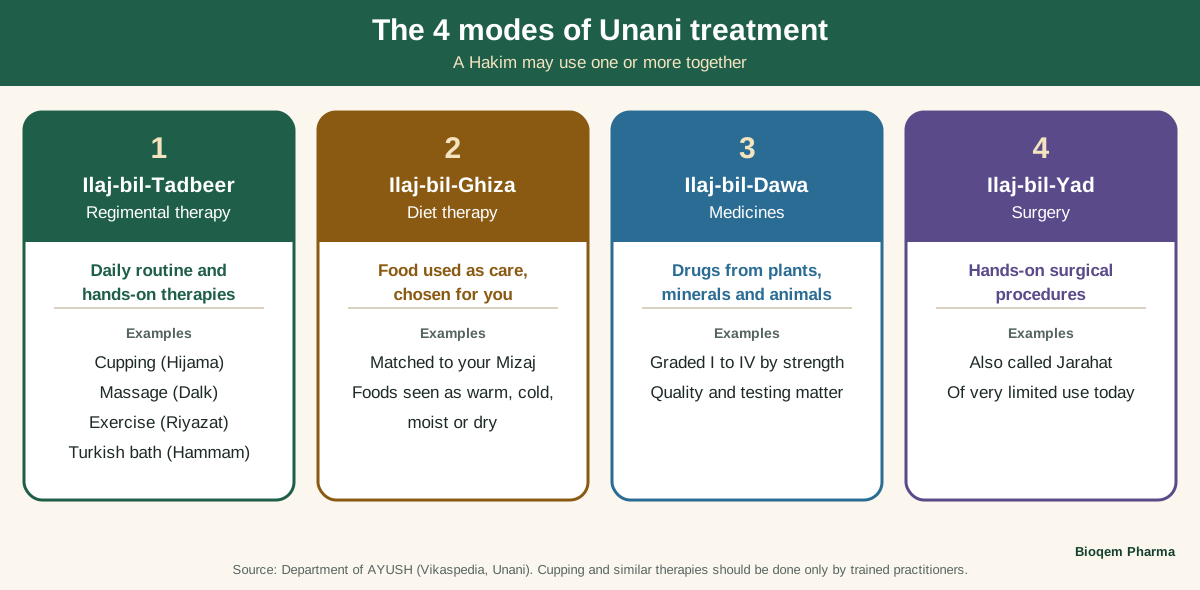
Contact Us: 7975536716 | Free Shipping on All Orders Over ₹599! |  100% Ayurvedic Products | Worldwide Fast Delivery 

Add to cart