

Quick answer
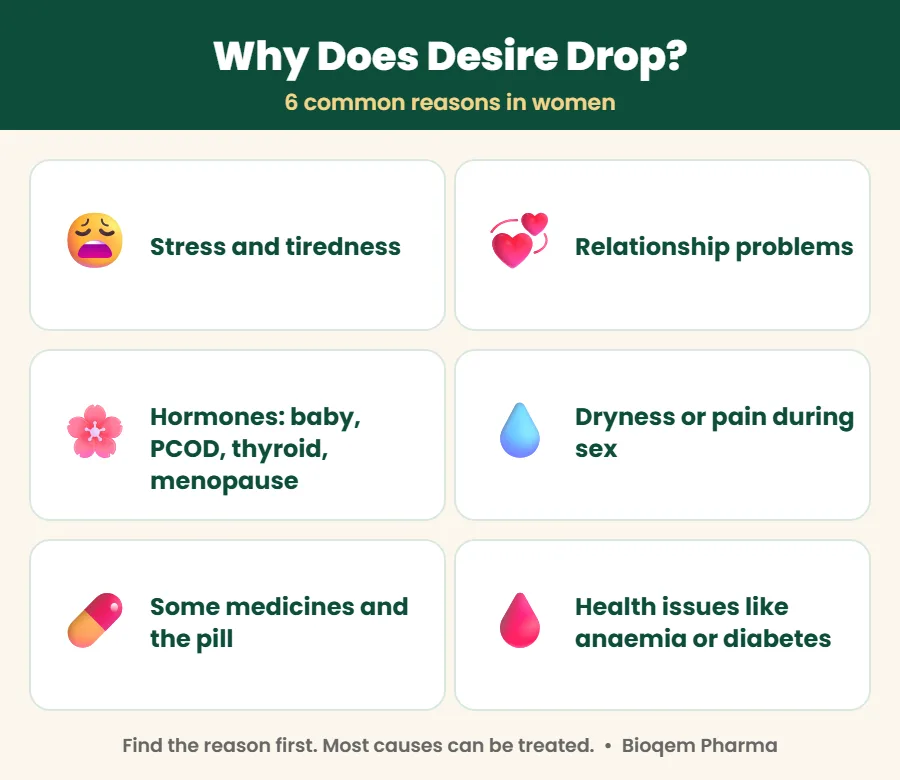
Low sex drive is common in women. It usually has a clear reason: stress, tiredness, fights with a partner, hormone changes (after a baby, with PCOD, thyroid problems or near menopause), pain during sex, or some medicines. To increase libido in women, first fix the reason. Then sleep well, exercise, lower stress, talk openly with your partner and use a lubricant if sex feels dry. See a gynaecologist (women’s doctor) if it worries you or lasts for months.
Maybe you wanted sex more often before. Maybe you never felt much desire and now you worry. Or maybe your partner has noticed, and it is causing tension. Whatever the reason, you are not alone.
This guide explains women’s sexual health in simple words. You will learn what libido is, why it changes, which reasons you can fix at home and which need a doctor, and how to increase libido in women in safe ways. It is written for Indian women. Common reasons here, like anaemia (low iron), PCOD and no privacy at home, are often missing in foreign articles.
Key takeaways
- There is no “normal” level of desire. It only matters if it bothers you or your relationship.
- The most common causes are stress, tiredness, relationship issues, hormones, pain during sex and medicines.
- In one Indian clinic study, 52% of women reported lack of sexual desire, so this is very common.
- Fixing the cause works better than any “booster” pill.
- Avoid unlabelled “female sex tablets”. Some contain hidden drugs.
✍️ Written by: Bioqem Pharma editorial team | 🩺 Medically reviewed by: Dr Danish Farhan (BUMS) | 📅 Last reviewed: 28 November 2026
In this article
What is libido in a woman?
Libido means sex drive, or how much you want sex. In women, three things affect it: the body (hormones, energy, health), the mind (mood, stress, how you feel about yourself) and the relationship (trust, love and talking).
Many women do not feel sudden desire. Often, desire starts only after touching and closeness begin. Doctors call this responsive desire. It is normal. Just knowing this takes away a lot of worry for many couples.
There is also no magic number. Mayo Clinic says there is no set number that defines low sex drive, and that it varies from person to person. Low desire is a problem only if it bothers you or hurts your relationship.
How common is low sex drive in women?
Very common, even though few women talk about it. Changes in women sex drive and female sexual desire happen at every age. In a study of 520 women at a North Indian gynaecology clinic, 52% said they lacked sexual desire. The doctors said these problems are common in Indian women, but women rarely talk about them because of shame.
It becomes even more common with age. In a study of postmenopausal women in North India, 80.9% of women reported some form of sexual difficulty, and problems increased with age and with the number of years since menopause.
Why does a woman’s sex drive drop? Common causes
Most women have more than one reason. The NHS lists relationship problems, stress, anxiety or depression, sexual problems like vaginal dryness, pregnancy and a new baby, lower hormone levels around menopause, some medicines, hormonal contraception and too much alcohol among the main causes.
| Type of cause | Examples |
|---|---|
| Everyday life | Work stress, poor sleep, caring for children or elders, no privacy at home |
| Relationship | Arguments, poor communication, feeling unheard, lack of affection outside the bedroom |
| Hormones | After childbirth and breastfeeding, PCOD, thyroid problems, perimenopause and menopause |
| Health conditions | Anaemia, diabetes, high blood pressure, heart disease, depression |
| Pain or discomfort | Vaginal dryness, infections, vaginismus (the vagina tightens on its own), endometriosis |
| Medicines | Some antidepressants, blood pressure medicines, hormonal contraception |
| Body image and past experience | Low confidence, weight worries, bad past experiences |
Do hormones affect libido? How to increase sex hormone in female naturally
Yes. Oestrogen (a female hormone) keeps the vagina wet and comfortable. Testosterone (a hormone women also make in small amounts) helps with desire. When these hormones change, desire often changes too. This mostly happens:
- After childbirth and while breastfeeding: oestrogen stays low, so dryness and tiredness are common. This usually improves with time.
- PCOD: hormone imbalance, weight changes and body-image worries can all affect desire. Read our guide on PCOD.
- Thyroid problems: an underactive thyroid can cause tiredness and low desire. A simple blood test checks this.
- Perimenopause and menopause: falling oestrogen causes dryness and sometimes pain, which can reduce interest in sex.
You cannot raise sex hormones at home with one trick. But you can help your hormones stay balanced: sleep well, stay active, eat enough protein and healthy fats, keep a healthy weight, and treat thyroid problems and PCOD. If a blood test shows a real hormone problem, your gynaecologist can suggest treatment.
How to increase sex drive in a 40-year-old lady
In their 40s, many women reach perimenopause (the few years before periods stop). Periods may become irregular, sleep may get worse, and the vagina can get drier. Desire may drop, but there is a lot you can do:
- Use a water-based lubricant if sex feels dry. It is simple and effective.
- Talk to a gynaecologist about vaginal moisturisers or hormone options if dryness or pain continues.
- Keep up strength exercise and walking; they support mood, sleep and body confidence.
- Make time for closeness without pressure, such as a walk together or a massage.
- Check thyroid, blood sugar and iron levels, which often change around this age.
How to increase libido in women: 10 steps that help
Start with the step that fits your reason. You do not need all ten.
1. Find and treat the cause
If you feel tired because of low iron, iron helps. If dryness causes pain, a lubricant helps. If a medicine is the reason, your doctor may change it. Fixing the reason is the most useful step.
2. Get enough sleep
Being very tired is one of the biggest reasons for low desire, especially for mothers and working women. Try to sleep 7 to 8 hours. Ask family for help with night-time baby care when you can.
3. Move your body
Exercise lifts your mood and energy, helps you feel good about your body and improves blood flow. Fast walking, yoga, dancing or light weights for 30 minutes on most days is enough.
4. Manage stress
Mayo Clinic suggests finding ways to cope with stress from work, money and daily hassles to help sex drive. Breathing exercises, journaling, yoga and short breaks during the day all count.

5. Talk openly with your partner
Tell your partner what you like, what feels uncomfortable and what you need. Couples who talk openly usually have a better sex life. Hugs and kind words during the day matter too.
6. Make time and privacy for intimacy
In busy or joint-family homes, it can be hard to get privacy. Planning time together is fine and practical. A locked door, a quiet hour or a short trip can help a lot.
7. Use a lubricant if sex is dry
Dryness makes sex painful, and pain quickly lowers desire. A water-based lubricant (gel) is safe for most women and can be used with condoms.
8. Strengthen your pelvic floor
Kegel exercises can improve feeling during sex and bladder control. Gently squeeze the muscles you use to hold urine, hold for 3 to 5 seconds, then relax. Do them while sitting or lying down, not while passing urine.
9. Limit alcohol and stop smoking
A little alcohol may relax you, but more reduces sexual feeling. Smoking lowers blood flow to the private parts.
10. Look after your mind
Sadness, depression and worry strongly lower desire. If you feel low for more than two weeks, talk to a doctor or counsellor. When your mood gets better, desire often comes back.
Which foods help women’s sex drive?
No single food works like magic. But good food gives you the energy, mood and hormones that desire needs. Eat more of these:
| Food | Why it helps |
|---|---|
| Iron-rich foods: spinach, beetroot, dates, jaggery, dals, eggs | Prevent anaemia and tiredness |
| Protein: dals, paneer, curd, eggs, fish, chicken | Energy and hormone building blocks |
| Healthy fats: nuts, seeds, ghee in small amounts, fish | Support hormone production |
| Fruits rich in vitamin C: amla, guava, oranges | Help the body absorb iron |
| Whole grains: millets, oats, brown rice | Steady energy and better mood |
Herbs such as shatavari and ashwagandha are traditionally used in Ayurveda for women’s health and stress, but research on desire is limited. If you are curious about shilajit, read our article on shilajit for women first.
Are “female sex tablets” safe?
Many people in India search for “female sex tablets”. Please be careful. Many products sold online have no licence number, no clear list of ingredients and very big promises. Some “herbal” sex products have been found to contain hidden medicines.
Some real medicines for low desire do exist, but only a doctor should give them, and they have side effects. The safe way is to see a gynaecologist, find the reason and get the right treatment.
Myths about women’s sexual health
| Myth | Fact |
|---|---|
| Women should always feel desire first | Many women feel desire only after closeness begins. This is normal. |
| Low libido means you do not love your partner | Stress, tiredness, hormones and pain are far more common reasons. |
| Desire ends after 40 or menopause | Many women enjoy sex for life, especially once dryness and pain are treated. |
| Pain during sex is normal | Pain is a sign that something needs attention. It is treatable. |
| A tablet can fix it overnight | Fixing the cause works better and lasts longer than any pill. |
When should you see a doctor?
The NHS suggests seeing a doctor if you are worried about a low sex drive, if you think a medicine or contraception may be affecting it, or if it has not returned after pregnancy. Also see a gynaecologist if you have:
- Pain, burning or bleeding during or after sex
- Unusual discharge, itching or a bad smell
- Irregular or very heavy periods
- Ongoing tiredness, hair fall or weight change (possible thyroid or anaemia)
- Low mood for more than two weeks
A doctor may check your hormones, thyroid, blood sugar and iron levels. Mayo Clinic notes that blood tests can look for hormone and thyroid problems, diabetes and other conditions. Counselling or sex therapy can also help, especially for relationship or emotional causes.
Partners can read our men’s sexual health guide too, because sexual health is a shared journey. Couples planning a baby may also find our guide on how to increase sperm count useful.
Frequently asked questions
How can I increase my libido naturally as a woman?
Find the cause, sleep 7 to 8 hours, exercise, manage stress, talk with your partner and use a lubricant if sex is dry. Treat problems like anaemia, thyroid or PCOD with your doctor.
Why do women lose interest in sex?
Common reasons are stress, tiredness, relationship problems, hormone changes after childbirth or around menopause, pain during sex, depression and some medicines.
Is it normal for a woman to have no sex drive?
Desire varies a lot between women, and some feel little desire. It is only a problem if it bothers you or your relationship.
Does PCOD affect libido?
It can. Hormone imbalance, weight changes, mood and body image linked to PCOD may lower desire. Managing PCOD often helps.
Which hormone increases a woman’s sex drive?
Testosterone plays a role in desire, and oestrogen keeps the vagina comfortable. Both work together, along with mood and relationship factors.
Does sex drive decrease after 40?
It can, as perimenopause lowers oestrogen and causes dryness. Lubricants, treatment of dryness and healthy habits help many women.
Can birth control pills lower libido?
In some women, yes. The NHS lists hormonal contraception as a possible cause. Talk to your doctor if you notice a change.
Which doctor should I see for low libido?
Start with a gynaecologist. They may refer you to a counsellor, sex therapist or endocrinologist if needed.
The bottom line
Low desire is one of the most common worries in women’s sexual health. It is not “all in your head”. Stress, tiredness, hormones, pain, medicines and relationship problems are the usual reasons, and most can be fixed. Start with good sleep, exercise, less stress and open talk with your partner. Treat dryness or pain, and see a gynaecologist if the change worries you. With the right help, most women can enjoy a happy sex life at any age.
Sources
- NHS: Loss of libido
- Mayo Clinic: Low sex drive in women, diagnosis and treatment
- a study of 520 women at a North Indian gynaecology clinic: Prevalence of sexual dysfunction in women attending a gynaecology clinic
- a study of postmenopausal women in North India: Sexual health in postmenopausal women of North India
Disclaimer: This article is for general education only. It is not medical advice and does not diagnose, treat, cure or prevent any disease. Please talk to a qualified doctor before you change your diet, routine or medicines.