
Quick answer: Men’s sexual health means your body, mind and relationships all work well together in your sex life. It covers desire, erections, ejaculation, fertility and safe sex. Most problems are common and many are linked to stress, sleep, weight, blood sugar or heart health. Simple daily habits help, and a doctor can help when problems keep coming back.
Key takeaways
- Most men face a sexual problem at some point. It is nothing to feel ashamed of.
- Your mind matters as much as your body. Stress and worry can affect erections and desire.
- Erection problems can be an early sign of diabetes or heart disease, so don’t ignore them.
- Sleep, exercise, good food and less alcohol and smoking support sexual health.
- Ayurveda and Unani have long traditions here, but herbs need care, quality checks and a doctor’s advice.
Written by the Bioqem Pharma editorial team. Medically reviewed by [CONFIRM: reviewer name and qualification]. Last reviewed: 7 October 2026.
In this guide
What is men’s sexual health?
Men’s sexual health is how well your body, mind and relationship support a satisfying and safe sex life. It is not only about “performance”. It includes how you feel about sex, how you talk with your partner, and how you protect each other.
Doctors usually think about five parts:
- Desire: your interest in sex, also called libido.
- Erection: getting and keeping an erection firm enough for sex.
- Ejaculation and control: the timing feels right for you and your partner.
- Fertility: healthy sperm, if you want children. This is also called male reproductive health.
- Safety and comfort: safe sex, no pain, and a relationship where both people feel respected.
When one part slips, the others often follow. A bad week of stress can lower desire. Worry about that can then affect erections. The good news? The same simple habits support all five parts.
What are the most common sexual problems in men?
The most common ones are erection problems, early ejaculation and low desire. Fertility worries and performance anxiety are also common. Almost every man faces one of these at some point. One bad night is normal. A problem that keeps coming back for weeks is worth looking at.
| Problem | What it feels like | Common reasons |
|---|---|---|
| Erectile dysfunction (ED) | Trouble getting or keeping an erection | Stress, diabetes, high blood pressure, smoking, some medicines |
| Premature (early) ejaculation | Ejaculating sooner than you or your partner want | Anxiety, excitement, relationship stress, habit |
| Low libido | Little or no interest in sex | Tiredness, stress, depression, low testosterone |
| Performance anxiety | Worry about “doing well” that ruins the moment | Past bad experience, pressure, comparison with porn |
| Fertility concerns | Trying for a baby for a year with no success | Low sperm count, heat, smoking, alcohol, health conditions |
| Curved or painful erection | A bend or lump in the penis, or pain | Scar tissue after minor injury (Peyronie’s disease) |
Each of these has its own guide on our blog, and we will keep adding more. Start with the problem that worries you most.
What causes these problems?
Sexual problems usually come from a mix of body, mind and lifestyle reasons. It is rarely just one thing. The US National Institute of Diabetes and Digestive and Kidney Diseases lists many common causes of erection problems. These include diabetes, heart disease, anxiety, depression, some medicines, low testosterone, smoking and heavy drinking.
Body reasons: An erection needs good blood flow, healthy nerves and balanced hormones. Diabetes, high blood pressure, high cholesterol and obesity can damage the small blood vessels. Some medicines for blood pressure, depression or allergies can also play a part.
Mind reasons: Your brain starts every erection. Stress at work, money worries, depression or a fight with your partner can switch off desire. Fear of failing can turn one bad night into a pattern.
Lifestyle reasons: Poor sleep, long hours sitting, little exercise, smoking, alcohol and junk food all add up.
Think of Ravi, a 32-year-old software engineer. He works late, sleeps five hours, skips the gym and drinks most weekends. His desire has dropped and he feels “tired all the time”. Nothing is “broken”. His body is just running on empty.
Why can erection problems be an early health warning?
Erection problems can be one of the first signs of heart disease or diabetes. The blood vessels in the penis are small. They often show damage before the bigger vessels around the heart do. Mayo Clinic notes that erection problems can be a sign of a health condition that needs care, and a risk factor for heart disease.
So if erections become weak or difficult again and again, don’t just hide it. Ask your doctor to check:
- Blood sugar (for diabetes)
- Blood pressure
- Cholesterol
- Weight and waist size
- Thyroid and testosterone, if your doctor feels it is needed
Many men in India skip this step because of shame. That is a real loss. A simple blood test can catch a health problem early, when it is easier to manage.
How does sexual health change with age?
Sexual health changes slowly with age, but a good sex life is possible at every stage. Erection problems become more common as men get older, mostly because of blood vessel and blood sugar changes. Age alone is not the full story. Lifestyle matters a lot.
| Age | What often changes | What helps most |
|---|---|---|
| 20s | Problems are mostly linked to anxiety, inexperience or habits | Learn the facts, talk openly, limit alcohol and porn |
| 30s | Work stress, poor sleep and weight gain start to show | Sleep 7 to 8 hours, exercise, manage stress |
| 40s | Blood pressure, blood sugar and belly fat may rise | Yearly health check-ups, active lifestyle, less smoking and drinking |
| 50s and beyond | Erections may need more touch and time; testosterone may dip | Patience, open talk with your partner, regular medical care |
Picture a man like Suresh, 48, who has had diabetes for six years. He notices weaker erections and feels embarrassed. His best first step is a visit to his doctor to check his sugar control. A daily walk helps too. Every person is different, but this is why the body check comes first.
How do Ayurveda and Unani see men’s sexual wellness?
Ayurveda and Unani see a man’s sexual wellness as a sign of good overall health, not a separate problem. Both systems say strong digestion, good sleep, a calm mind and healthy food build sexual strength.
In Ayurveda, this branch is called Vajikarana (therapies for sexual vigour and healthy children). The word comes from “vaji”, meaning horse, a symbol of strength. Ayurveda links sexual health to Shukra dhatu (the reproductive tissue, the last and most refined body tissue). A review in the Indian Journal of Psychiatry explains that Vajikarana uses diet, daily routine, cleansing, oil massage and herbal mixes together. It also says many of these formulas have not been tested in strong scientific studies.
In Unani, sexual strength is called Quwwat-e-Bah (the power of sexual function). Unani doctors look at your Mizaj (body temperament) and use diet, lifestyle and traditional preparations such as Majoon (herbal jams) to support balance.
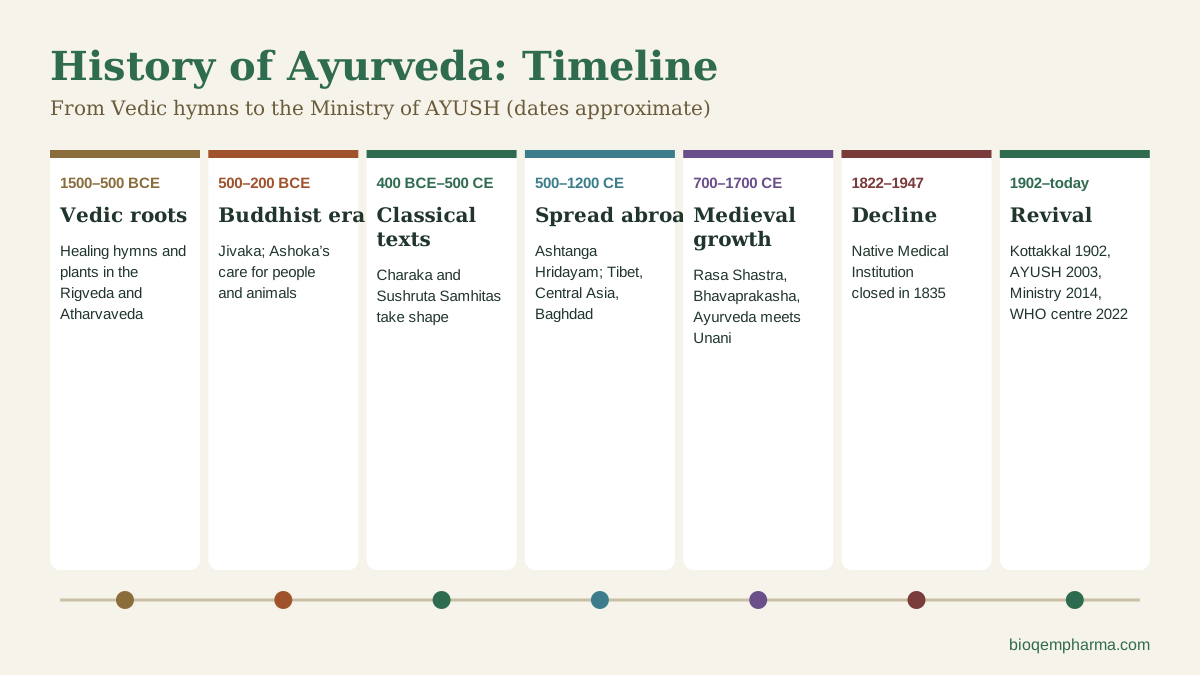
Our honest view: these traditions offer useful habits for daily life. But herbs are not magic, and they don’t replace a medical check-up. If you’re curious about how these systems began, read our guide to the history of Ayurveda.
Which herbs are traditionally used for male sexual health, and are they safe?
Ashwagandha, shilajit, safed musli, kaunch beej and gokshura are the herbs most often used in Ayurveda for men’s vigour. Some have small modern studies, but research is still limited. Quality and safety matter more than any promise on a label.
| Herb | Traditionally used for | What to keep in mind |
|---|---|---|
| Ashwagandha (Indian winter cherry) | Stress, energy, strength | Small studies only; rare liver problems reported; check with a doctor if you have thyroid issues |
| Shilajit (mineral resin from mountain rocks) | Energy and vitality | Raw shilajit can contain heavy metals; use only purified, lab-tested products |
| Safed musli | Strength and vigour | Limited modern research |
| Kaunch beej (Mucuna pruriens) | Vigour and fertility support | Contains L-dopa; avoid with Parkinson’s or mental health medicines unless a doctor approves |
| Gokshura (Tribulus terrestris) | Urinary and reproductive health | Evidence is mixed |
The US National Center for Complementary and Integrative Health notes that ashwagandha seems safe for short-term use, but rare cases of liver injury have been reported. It may also interact with medicines for diabetes, blood pressure and thyroid.
Three safety rules for any herb:
- Talk to a qualified Ayurvedic or Unani doctor first, especially if you take regular medicines.
- Choose products with lab test reports for heavy metals and hidden steroids. At Bioqem, we test every batch for these and share reports on request.
- Stay away from “instant” or “power” pills sold without proper labels. The US FDA has found many such products with hidden prescription drugs that can be dangerous, especially for heart patients.
These herbs are meant for adult men. Keep them away from children, and don’t share them with a pregnant or breastfeeding partner.
What daily habits improve sexual health?
The habits that keep your heart healthy also keep your sex life healthy. You don’t need big changes. Small steps, done every day, work best.
- Move every day. Brisk walking, cycling, swimming or yoga for 30 minutes improves blood flow.
- Train your pelvic floor. These are the muscles you use to stop urine midway. Squeeze for 3 seconds, relax for 3 seconds, 10 times, a few times a day. A 2019 review in the journal Physiotherapy found these exercises can help with both erection problems and early ejaculation.
- Sleep 7 to 8 hours. Short sleep drains energy, mood and desire.
- Eat real food. Fruits, vegetables, dals, nuts, seeds, whole grains and enough protein support male reproductive health. Cut down on sugar, fried food and packaged snacks.
- Drink less, quit smoking. Smoking damages blood vessels. Too much alcohol can weaken erections.
- Handle stress. Try 10 minutes of slow breathing, pranayama or a walk without your phone.
- Talk to your partner. Honest, kind talk reduces pressure on both of you. Sex is a team activity, not a test.
Picture Ali, a 27-year-old sales executive who is newly married and worried about finishing too early. Pelvic floor exercises, less late-night screen time and an open talk with his wife can lower the pressure he feels. For many men, that alone makes a real difference.
Why does safe sex matter for men?
Safe sex protects you and your partner from infections that often show no signs at all. The World Health Organization says more than 1 million curable sexually transmitted infections (STIs) are picked up every day worldwide. Chlamydia, gonorrhoea, syphilis and trichomoniasis are the most common curable ones.
- Use condoms correctly and every time with a new or casual partner.
- Get tested if you have a new partner, burning while passing urine, discharge, sores or rashes.
- Ask your doctor about hepatitis B and HPV vaccines.
- Don’t self-medicate with antibiotics. Get the right test first.
Men’s sexual health: myths vs facts
| Myth | Fact |
|---|---|
| Losing semen makes a man weak. | Semen is made all the time. Normal ejaculation does not drain your strength. |
| Real men never have erection problems. | Most men have them at some point. It is common, not a weakness. |
| Sexual problems are only “in the head”. | They are often linked to blood sugar, blood pressure, hormones or medicines. |
| Penis size decides a good sex life. | Comfort, connection and communication matter far more. |
| Herbal means 100% safe. | Herbs can have side effects and can mix badly with medicines. Quality matters. |
| Older men can’t enjoy sex. | Many men stay sexually active into old age with good health habits. |
When should you see a doctor?
See a doctor if a sexual problem lasts more than a few weeks, keeps coming back, or worries you. The NHS advises seeing a doctor if erection problems keep happening. Go sooner if you notice any of these red flags:
- Erection problems along with chest pain, breathlessness or leg pain when walking
- Pain, a lump or a new bend in the penis
- Blood in urine or semen
- Burning, discharge, sores or rashes in the genital area
- A lump or swelling in the testicles
- No pregnancy after one year of regular unprotected sex
- Low mood, loss of interest in life, or thoughts of self-harm
Which doctor should you see?
| Doctor | See them for |
|---|---|
| Family doctor (GP) | A first check-up, blood tests, referral |
| Urologist or andrologist | Erection problems, curved penis, testicle problems, fertility |
| Endocrinologist | Diabetes, thyroid or hormone problems |
| Psychiatrist or sex therapist | Anxiety, depression, relationship or performance worries |
| BAMS (Ayurveda) or BUMS (Unani) doctor | Diet, routine and traditional herbal support, alongside medical care |
Frequently asked questions
Are sexual problems in men common?
Yes, they are very common. Most men face erection problems, early ejaculation or low desire at some point. Often the cause is stress, tiredness or a health issue that can be managed.
Is it normal for sex drive to drop with age?
Some drop in desire is normal as you get older, but it should not disappear suddenly. A sharp fall can be linked to low testosterone, depression, medicines or poor sleep. A doctor can help find the reason.
How long does sex usually last for men?
There is no fixed “normal” time. What matters is whether you and your partner feel satisfied. Do you often finish much sooner than you both want, and does it upset you? Then the NHS suggests simple techniques and a talk with a doctor.
Can stress really affect erections?
Yes. Stress releases hormones that tighten blood vessels and switch off arousal. Worry about one bad night can also create a cycle of fear. Managing stress often helps.
Can diabetes or high blood pressure affect sexual health?
Yes. Both can damage the small blood vessels and nerves needed for an erection. Good control of sugar and blood pressure protects your sexual health too.
What foods support male sexual health?
Foods that are good for your heart are good for your sexual health. Think fruits, vegetables, dals, nuts, seeds, whole grains and fish if you eat it. No single “magic food” works on its own.
Are Ayurvedic herbs for men safe to take?
They can be safe when they are pure, lab-tested and taken with a doctor’s advice. Some herbs can mix badly with medicines for diabetes, blood pressure or thyroid. Always tell your doctor what you take.
Which doctor should I see for sexual problems?
Start with your family doctor for a basic check-up and blood tests. They may send you to a urologist, an endocrinologist or a therapist. A BAMS or BUMS doctor can guide you on diet and traditional support alongside this.
Sources
- Symptoms and Causes of Erectile Dysfunction, NIDDK (US National Institutes of Health)
- Erection problems (erectile dysfunction), NHS
- Vajikarana: Treatment of sexual dysfunctions based on Indian concepts, Indian Journal of Psychiatry (2013)
- Ashwagandha, National Center for Complementary and Integrative Health
- Sexually transmitted infections (STIs), World Health Organization
If you’d like to see the Ayurvedic and Unani products we make for men, you can browse our men’s health range.
This article is for general education only. It is not medical advice and does not diagnose, treat, cure or prevent any disease. Please talk to a qualified doctor before you change your diet, routine or medicines.